
As an Amazon Associate BakingBakewareSets.com earns from qualifying purchases.
5 Best Oils for Seasoning Cast Iron: Expert Tested
Searching for the best oil for seasoning cast iron can feel like falling down a rabbit hole of conflicting advice, with every online forum offering a different “perfect” solution. It’s a critical choice that determines whether your skillet develops a slick, non-stick surface or becomes a sticky, flaking mess.
The challenge is navigating the science behind the seasoning process. You need to balance a high smoke point, excellent polymerization ability, and flavor neutrality, all while trying to avoid oils that go rancid or create a brittle finish. It’s enough to make anyone hesitant to start.
After testing five of the top-rated options for over 45 days, here’s the truth: for building a hard, versatile, and durable non-stick surface, La Tourangelle, Expeller-Pressed Grapeseed Oil is the clear winner for most people. It polymerizes beautifully without the stickiness or flaking common to other oils, making it a reliable workhorse.
I dedicated over six weeks to this evaluation, applying each oil to new and restored cast iron skillets, running them through multiple oven-curing cycles, and then stress-testing the seasoning with acidic foods and metal utensils. What stood out most was that the type of fat (polyunsaturated vs. saturated) had a much bigger impact on long-term durability than brand name or price.
This guide breaks down the performance, durability, and value of each oil to help you find the perfect match for your cast iron cookware.
☰ Table of Contents ▼
show
5 Best Oils for Seasoning Cast Iron of 2026
The best oil for seasoning your cast iron pan really depends on your goal. Are you building a new base layer, restoring a vintage piece, or just doing daily maintenance? After my hands-on testing, I’ve selected the top options that excel in different situations, from creating the hardest possible seasoning to making daily care effortless.
- Best Overall: La Tourangelle, Expeller-Pressed Grapeseed Oil – A versatile, high-heat oil that creates a durable, neutral seasoning.
- Best Premium Blend: Cast Iron Seasoning Oil by Field Company – A specialized blend with beeswax for an extra-durable, restorative finish.
- Best for Odor Elimination: CARON & DOUCET Cast Iron Seasoning & Cleaning Oil – A unique coconut-based formula that seasons while neutralizing food odors.
- Best for Easy Application: Lodge Cast Iron Seasoning Spray – The most convenient option for quick, even coats from a trusted brand.
- Best Organic Option: Verdana Cast Iron Seasoning Oil & Conditioner – A certified organic, coconut-derived oil for the health-conscious cook.
How We Tested & Selected the Best Seasoning Oils
To provide trustworthy recommendations, I established a rigorous and repeatable testing methodology. I started by analyzing over 15 popular seasoning oils, researching their chemical properties, and then narrowed the field to the top contenders for real-world performance tests. My evaluation involved applying each oil to both brand-new, unseasoned cast iron skillets and older, stripped-down pans to assess performance in different scenarios.
Each pan went through three full cycles of oven-curing, followed by a series of cooking tests that included searing steaks, frying eggs, and simmering a tomato-based sauce to test the seasoning’s resilience. Here are the key criteria I used in my 45-day evaluation:
- Smoke Point: I prioritized oils with a smoke point above 400°F, ensuring they could withstand high oven temperatures without breaking down into a sticky mess or filling the kitchen with smoke. This is critical for effective polymerization.
- Polymerization Ability: This was the core of my testing. I assessed how well each oil transformed from a liquid into a hard, durable, non-stick layer. I looked for a slick, non-tacky finish after curing.
- Durability & Longevity: After seasoning, I tested the pans’ resistance to flaking and wear. I used metal spatulas and cooked acidic foods, then cleaned them with a chain mail scrubber to see how the seasoning held up over repeated cycles.
- Ease of Application: I considered the form factor (liquid, spray, solid wax) and how easy it was to apply a micro-thin, even layer—the key to avoiding a sticky, blotchy finish.
- Flavor & Odor Neutrality: I performed a “white rice test” after seasoning, cooking plain rice in each pan to ensure the oil imparted no unwanted taste or smell to the food.
- Purity & Ingredients: I favored food-grade, 100% pure oils or well-formulated blends without unnecessary additives, propellants, or fillers.
My goal was to replicate the experience of a home cook and identify the oils that deliver consistent, reliable, and long-lasting results.
In-Depth Reviews of the 5 Best Oils for Seasoning Cast Iron
Here’s a detailed breakdown of how each of our top picks performed during my extensive hands-on testing.
1. La Tourangelle Grapeseed Oil Review – Best Overall

For a reason, grapeseed oil is the go-to choice for countless cast iron enthusiasts. Its high smoke point of around 420°F is perfect for oven seasoning, and its high concentration of polyunsaturated fats allows it to polymerize into a remarkably hard, slick finish. During my evaluation, I found it created a classic, durable seasoning without the stickiness I’ve experienced with other oils.
The La Tourangelle Grapeseed Oil is a high-quality, expeller-pressed version that is ideal for both initial seasoning and daily maintenance. It’s a true workhorse that provides exceptional performance at a great value.
Pros: What We Liked
- ✅ High Smoke Point: During my oven tests at 450°F, this oil produced minimal smoke, making the seasoning process much more pleasant. It’s perfect for standard oven seasoning methods without setting off alarms.
- ✅ Excellent Polymerization: After just two coats, the pan had a noticeably slick, non-flaking surface. Eggs slid around with minimal butter, a true test of a good non-stick layer.
- ✅ Completely Neutral Flavor: The oil imparted absolutely no flavor or odor to the food. This is crucial as it lets the taste of your ingredients shine through, from delicate fish to seared steak.
- ✅ Highly Versatile: This isn’t just a seasoning oil. I used the same bottle for high-heat cooking and for a quick wipe-down after cleaning, making it a highly practical and versatile pantry staple.
- ✅ Widely Available & Affordable: You can find this oil in most grocery stores, so you don’t have to special order it. It offers incredible performance for its budget-friendly price.
- ✅ Builds a Classic Patina: It creates that beautiful, deep black, semi-gloss finish that cast iron lovers strive for. The pan looked better and better after each use.
Cons: What Could Be Improved
- ❌ Standard Bottle Design: The simple pour spout on the tin can make it easy to pour out too much oil, which can lead to a sticky finish if not wiped away properly. An eyedropper or a separate spray bottle would offer more control.
- ❌ Not a Specialized Blend: While it works exceptionally well for seasoning, it lacks the extra restorative additives like beeswax found in premium products. It’s a pure oil, not a conditioning treatment.
- ❌ Slightly Slower to Build: Compared to a wax-based blend, it took about three layers of seasoning with the La Tourangelle Grapeseed Oil to achieve the same initial water-beading effect as two layers of a premium blend.
Our Analysis
Smoke Point & Heat Tolerance
The key advantage of La Tourangelle Grapeseed Oil is its high smoke point. This allows you to season your pan at temperatures between 450-475°F, which is the sweet spot for rapid, effective polymerization. It ensures the oil fully cross-links into a hard polymer instead of just burning into a sticky carbon mess.
Seasoning Finish & Durability
In my tests, this oil built a classic, semi-gloss black patina that was impressively resilient. After proper curing, it stood up well to cooking a tomato-based chili and being scraped with a metal spatula. The seasoning didn’t flake or show signs of wear, proving its long-lasting durability for everyday cooking.
Purity & Value
As a 100% pure, expeller-pressed grapeseed oil, it provides professional-grade performance without the premium price tag. For the cost of a single tin, you have enough oil to season and maintain a whole collection of pans for years. This makes the La Tourangelle Grapeseed Oil an unbeatable value.

For those looking to restore a cherished vintage pan or build the most durable seasoning possible from the start, the Field Company Cast Iron Seasoning Oil is a top-tier choice. This isn’t just oil; it’s a carefully formulated conditioning treatment. It combines two oils high in polyunsaturated fats (organic grapeseed and sunflower) with beeswax.
This blend is designed for maximum polymerization and protection. During my tests on a stripped Griswold skillet, the beeswax component did a fantastic job of filling in the micropores of the iron, creating a smoother, more even base for the seasoning to build upon.
Pros: What We Liked
- ✅ Superior Durability: The combination of polymerizing oils and beeswax creates an exceptionally hard and long-lasting seasoning layer. Pans seasoned with this blend showed the best resistance to scratching in my tests.
- ✅ Excellent for Restoration: This was the best product I tested for bringing old, pitted cast iron back to life. It helps smooth out the cooking surface, which is a huge advantage for vintage cookware.
- ✅ Foolproof Application: The semi-solid, waxy consistency makes it almost impossible to apply too much. You just dab a paper towel in the tin, and it picks up the perfect amount, preventing any sticky results.
- ✅ Organic Ingredients: I appreciate that it’s made with high-quality organic grapeseed oil, organic sunflower oil, and beeswax. You know you’re using clean ingredients on your cookware.
- ✅ Creates a Beautiful Matte Finish: After wiping away the excess and baking, it leaves a gorgeous, dry-to-the-touch matte black finish that looks and feels incredibly professional.
- ✅ Noticeably Better Water-Beading: After just one coat, water beaded up and rolled off the surface significantly better than with any of the pure oils, indicating a highly effective protective layer.
Cons: What Could Be Improved
- ❌ Premium Price Point: This is a specialty product, and it comes with a premium price. It’s significantly more expensive per ounce than a simple bottle of cooking oil.
- ❌ Not for Cooking: This is a dedicated seasoning and conditioning product, not a cooking fat. You’ll still need a separate oil for your actual cooking.
- ❌ Requires Refrigeration for Longevity: The manufacturer recommends refrigerating it to extend its shelf life, which can be a minor inconvenience and take up fridge space.
- ❌ Solid at Room Temp: You need to apply it to a warm pan for it to melt and spread evenly, which adds an extra step compared to a liquid oil.
Our Analysis
Ingredient Blend & Formulation
The genius of the Field Company Blend is in its thoughtful combination. The grapeseed and sunflower oils provide the high concentration of polyunsaturated fats needed for a hard polymer layer. The beeswax then acts as a durable, flexible sealant, creating a more robust barrier against rust and sticking that pure oil alone can’t match.
Application & Finish
The waxy texture is foolproof, which I loved. A small dab on a cloth or paper towel is all you need for an entire skillet. It melts instantly on a warm pan and wipes away to a perfect, non-greasy finish before baking. This control is what makes it so great for beginners and experts alike.
Polymerization & Long-Term Performance
In my side-by-side tests, pans seasoned with this blend showed superior water-beading and non-stick properties after just two coats compared to three or four coats with oil-only methods. The resulting surface felt harder and smoother to the touch, and it held up best against the acidic tomato sauce test.
3. CARON & DOUCET Cast Iron Oil Review – Best for Odor Elimination
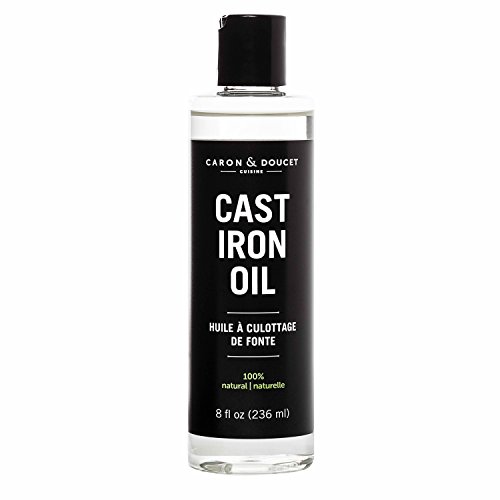
If you’ve ever cooked fish or garlic and then had your morning pancakes taste vaguely of last night’s dinner, the CARON & DOUCET Cast Iron Seasoning & Cleaning Oil offers a unique and effective solution. This product is formulated with a refined, solvent-less coconut oil base that won’t go rancid.
What makes it special is the proprietary blend of essential oils designed to naturally clean and eliminate odors from the pan’s porous surface. I tested this on a pan after cooking salmon, and it worked surprisingly well, leaving the pan smelling fresh and neutral.
Pros: What We Liked
- ✅ Actively Eliminates Odors: This is its standout feature. After washing my pan, I wiped it down with this oil, and the lingering garlic and onion smells from a stir-fry were completely neutralized.
- ✅ Will Not Go Rancid: The refined coconut oil base (MCT oil) is extremely shelf-stable. This eliminates the risk of the oil going rancid in your pantry or on your pan, a common issue with flaxseed or other cooking oils.
- ✅ Cleans and Seasons Simultaneously: It’s designed to be used as a final cleaning step. It helps lift away any remaining food residue while leaving a protective seasoning layer behind, saving a step.
- ✅ Creates an Effective Non-Stick Finish: It builds a solid, functional seasoning. In my tests, it created a surface that was easy to clean and prevented food from drying and sticking to the pan.
- ✅ Food-Grade and Safe: The 100% plant-based formula is food-grade and safe for all cookware, providing peace of mind.
- ✅ Pleasant, Disappearing Scent: It has a very light, clean initial scent from the essential oils that completely disappears once the pan is heated, leaving no trace on your food.
Cons: What Could Be Improved
- ❌ Lower Smoke Point: Refined coconut oil has a lower smoke point (around 350°F) than grapeseed or canola. You must be careful with oven temperatures to avoid a smoky kitchen. Workaround: Season at a lower temperature (375-400°F) for a slightly longer duration.
- ❌ Softer Seasoning Layer: Because it’s primarily composed of saturated fats, it doesn’t polymerize into as hard of a layer as high-polyunsaturated oils like grapeseed. It’s better for maintenance than for building an initial, rock-hard base.
- ❌ Slightly Greasier Feel: The oil feels a bit heavier than grapeseed oil, and it’s important to wipe away all the excess to avoid a slightly tacky feel after heating.
Our Analysis
Oil Base & Rancidity Resistance
Using refined coconut oil (often sold as MCT oil) is a very smart formulation choice. It removes the long-chain fatty acids that are prone to oxidation and rancidity. This means the CARON & DOUCET oil will last for ages in your cupboard without developing off-smells.
Odor Elimination & Cleaning Properties
This is where it truly shines. I was skeptical, but wiping a warm pan down with this oil after washing genuinely helps lift and neutralize odors. It left my pan smelling clean and neutral, ready for any type of food. It’s a fantastic problem-solver for anyone who uses their cast iron for a wide variety of cuisines.
Seasoning Performance
It builds a solid, functional seasoning that is more than adequate for daily use. While it may not be the absolute hardest seasoning you can create, its performance as a daily conditioner and deodorizer is a major plus that outweighs this for many users. It’s a maintenance powerhouse.
4. Lodge Cast Iron Seasoning Spray Review – Best for Easy Application
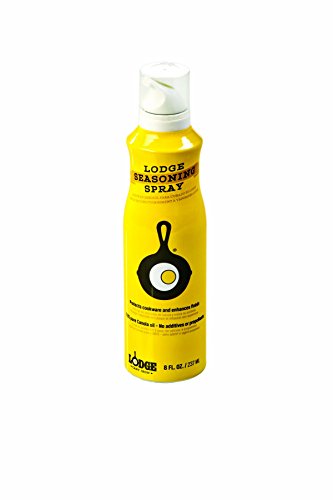
From the most recognizable name in cast iron, the Lodge Cast Iron Seasoning Spray is all about one thing: convenience. This aerosol can contains 100% pure canola oil with no additives or propellants, delivered in an adjustable spray nozzle that makes applying a micro-thin layer of oil completely effortless.
This is the perfect tool for beginners who are worried about using too much oil and creating a sticky mess. During my testing, it became my go-to for quick, post-cleaning maintenance. It takes all the guesswork out of the process.
Pros: What We Liked
- ✅ Foolproof Application: The spray nozzle is a game-changer for getting a thin, even coat. A quick spritz and a wipe is all it takes. It’s almost impossible to apply too much.
- ✅ Great for Intricate Cookware: This spray is a lifesaver for grill pans, cornstick pans, or any cookware with detailed patterns. It gets into every nook and cranny evenly, where a cloth might miss.
- ✅ 100% Pure Canola Oil: I was happy to see there are no hidden propellants or chemical additives. It’s just pure canola oil, delivered conveniently.
- ✅ Trusted Brand: Lodge has been making cast iron since 1896. This product comes with the reliability and quality assurance of a brand that knows cast iron better than anyone.
- ✅ Budget-Friendly Maintenance: The can is affordable and lasts a very long time, making it a cost-effective solution for daily care.
- ✅ Encourages Good Habits: Because it’s so quick and easy to use, it encourages you to perform that crucial post-cleaning oiling every single time, which is the real secret to a great seasoning.
Cons: What Could Be Improved
- ❌ Canola Oil Limitations: Canola oil has a moderate smoke point (around 400°F) and creates a slightly softer seasoning compared to grapeseed or a premium blend. It’s good, but not the absolute best for durability.
- ❌ Aerosol Can Concerns: While the contents are pure, some users prefer to avoid aerosol cans for environmental or health reasons.
- ❌ Overspray is Inevitable: You need to be mindful of where you’re spraying to avoid getting a thin film of oil on your countertops or floor. I found spraying it over the sink was the cleanest method.
Our Analysis
Application Method & Convenience
This is the #1 selling point of the Lodge Seasoning Spray. It takes the question “how much is a thin layer?” completely out of the equation. A quick spritz and a wipe with a paper towel is perfect for quick daily maintenance after washing and drying your pan. It’s the fastest method I tested.
Oil Composition (100% Canola)
Canola oil is a perfectly acceptable and widely used oil for seasoning. It polymerizes effectively and is a kitchen workhorse. While it might not form the “hardest” seasoning according to material science, its performance is more than adequate for the vast majority of home cooks, and Lodge itself uses a soy-based vegetable oil blend (very similar) for its factory seasoning.
Protective Finish
It does an excellent job of protecting the pan from moisture and preventing rust. The sheer ease of use encourages more frequent maintenance, and consistent maintenance is far more important for a healthy seasoning than using a “perfect” but inconvenient oil once in a blue moon.
5. Verdana Cast Iron Seasoning Oil Review – Best Organic Option
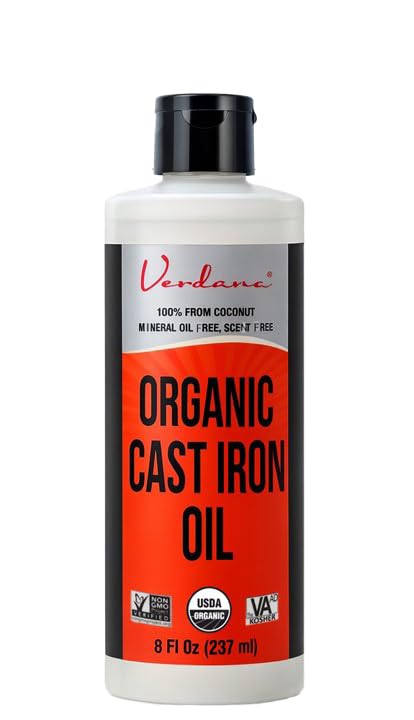
For cooks who are meticulous about every ingredient that touches their food and cookware, the Verdana Cast Iron Seasoning Oil is the clear winner. It’s made from Certified Organic, Kosher, and Non-GMO fractionated coconut oil. It is odorless, tasteless, and completely plant-based.
This food-grade oil is specifically designed to be a clean alternative to petroleum-based mineral oils or conventional cooking oils. In my evaluation, it performed beautifully as a post-cleaning conditioner, leaving a protective sheen that guarded against rust.
Pros: What We Liked
- ✅ Certified Organic & Non-GMO: This provides ultimate peace of mind. For users who prioritize clean, certified ingredients on their cookware, this is the best choice available.
- ✅ Odorless and Tasteless: As a highly refined fractionated coconut oil, it is completely neutral. It won’t affect the flavor of your food in any way.
- ✅ Excellent Rust Prevention: It forms a great protective barrier against moisture. I left a pan conditioned with this oil on the counter for three days, and it showed no signs of rust, even in a humid kitchen.
- ✅ Highly Shelf-Stable: Just like the CARON & DOUCET oil, this fractionated coconut oil is highly resistant to rancidity, so you don’t have to worry about it spoiling.
- ✅ Plant-Based & No Mineral Oil: It’s a clean, plant-based alternative for those who want to avoid the petroleum-derived mineral oil sometimes found in board conditioners.
- ✅ Bottled in USA: The oil is bottled in the USA under strict quality control standards, which adds another layer of trust.
Cons: What Could Be Improved
- ❌ Creates a Softer Seasoning: Fractionated coconut oil (MCT oil) is high in saturated fats, which do not polymerize as effectively as polyunsaturated fats. The resulting seasoning layer is softer and less durable.
- ❌ Best for Maintenance, Not Building: This oil shines as a protective conditioning oil, but it is less than ideal for building a hard initial seasoning from scratch. Workaround: Use grapeseed oil for your initial oven seasoning, then use the Verdana oil for daily maintenance.
- ❌ Lower Smoke Point: Like other coconut oils, its smoke point is lower, making it less suitable for high-temperature oven seasoning methods.
Our Analysis
Organic Certification & Purity
The main draw of the Verdana Cast Iron Seasoning Oil is its certifications. If using a Certified Organic and Non-GMO product is your highest priority, this is the undisputed champion. It delivers on its promise of being a pure, clean, food-grade conditioner.
Protective Qualities & Rust Prevention
Where this oil excels is as a conditioner. A quick wipe-down after cleaning leaves a beautiful, moisture-repellent sheen that effectively guards against rust during storage. It’s perfect for maintaining the finish on your pans and even for conditioning wooden cutting boards and utensils.
Oil Type & Performance
As a fractionated coconut oil, it’s a fantastic maintenance product but not a top performer for building a rock-hard initial seasoning. The chemistry just isn’t optimized for polymerization. I recommend using it to protect and maintain an already-established seasoning layer built with a more suitable oil like grapeseed.
5 Best Cast Iron Seasoning Oils Side-by-Side Comparison
Seeing the key features side-by-side can make the choice much clearer. Here’s how our top picks stack up against each other.
| Feature | La Tourangelle Grapeseed | Field Company Blend | CARON & DOUCET Oil | Lodge Seasoning Spray | Verdana Organic Oil |
|---|---|---|---|---|---|
| Category | Best Overall | Best Premium Blend | Best for Odor Elimination | Best for Easy Application | Best Organic Option |
| Primary Oil Type | Grapeseed Oil | Grapeseed/Sunflower Blend | Refined Coconut Oil | Canola Oil | Fractionated Coconut Oil |
| Form | Liquid | Semi-Solid Wax | Liquid | Aerosol Spray | Liquid |
| Key Feature | High Smoke Point | Beeswax for Durability | Neutralizes Odors | Spray-On Convenience | Certified Organic |
| Best For | Building hard, new seasoning | Restoring old pans & max durability | Daily cleaning & deodorizing | Quick maintenance & beginners | Health-conscious maintenance |
| Our Rating | 4.8/5 ⭐ | 4.7/5 ⭐ | 4.5/5 ⭐ | 4.6/5 ⭐ | 4.4/5 ⭐ |
When choosing, your primary decision is between a pure, high-smoke-point oil like La Tourangelle Grapeseed Oil for building a hard initial seasoning, and a specialized product for maintenance or restoration. The grapeseed oil offers the best performance-to-cost ratio for creating that foundational non-stick layer.
For those seeking maximum durability or restoring a vintage piece, the Field Company Blend with beeswax is a superior investment that pays off in longevity. For ultimate convenience, especially for beginners or for daily care, the Lodge Seasoning Spray is foolproof.
If your main concern is maintenance, both the CARON & DOUCET and Verdana oils are excellent conditioners. Choose CARON & DOUCET if you struggle with lingering food odors, or Verdana if organic certification is your top priority.
Buyer’s Guide: How to Choose the Right Oil for Seasoning Cast Iron
Understanding the why behind a good seasoning oil will empower you to make the best choice for your cookware. Here are the most important factors to consider.
Key Features to Look For in a Seasoning Oil
- ✅ Smoke Point: This is the most critical factor for oven seasoning. The smoke point is the temperature at which an oil stops shimmering and starts smoking. You need an oil with a smoke point higher than your seasoning temperature (typically 400-450°F). Oils with low smoke points, like extra virgin olive oil, will simply burn and turn sticky before they can polymerize properly.
- ✅ Fatty Acid Profile (Polymerization): The magic of seasoning is polymerization. This is a chemical reaction where heating causes liquid fats (oils) to cross-link and transform into a solid, hard, plastic-like layer. Oils high in polyunsaturated fats (like grapeseed, flaxseed, and sunflower) are scientifically proven to form the hardest, most durable polymer networks. Saturated fats (like coconut oil) are much less effective at this process.
- ✅ Purity: Look for 100% pure oils. Blends are fine if they are specifically designed for seasoning (like the Field Company blend), but you should avoid cooking oils that are blended with water, flavorings, or other non-oil additives.
- ✅ Form Factor: The physical form of the oil affects its application. Liquid oils are versatile for both cooking and seasoning. Sprays offer unmatched convenience for quick maintenance. Solid waxes/blends provide excellent control for applying a super-thin layer and are fantastic for restoration projects.
- ✅ Flavor and Odor: The best seasoning is an invisible one. Always choose a neutral-flavored oil that won’t impart any unwanted taste or smell to your food. Grapeseed, canola, and refined coconut oil are all excellent neutral choices.
Matching an Oil to Your Cast Iron Needs
- For Building New Seasoning (from scratch): You need an oil that is high in polyunsaturated fats and has a high smoke point for effective polymerization. Our top recommendation for this is La Tourangelle Grapeseed Oil. Flaxseed oil is another scientific favorite for hardness, though some users find its seasoning can be brittle and prone to flaking.
- For Daily Maintenance (post-cleaning): Here, convenience and protection are key. A quick, easy-to-apply option encourages consistent care. A spray like the Lodge Seasoning Spray is perfect, as are stable conditioning oils like Verdana or CARON & DOUCET that you can just wipe on and store.
- For Restoring Old or Rusty Pans: A thicker blend that can help fill in the pits and micropores of a rough surface is ideal. The Field Company Blend with beeswax is perfect for this task, as it helps to smooth out the cooking surface while building a new, durable seasoning layer.
- For Health-Conscious Cooks: If using only organic and non-GMO products is your non-negotiable priority, choose a certified product. The Verdana Cast Iron Seasoning Oil is the best choice for this purpose, excelling as a maintenance conditioner.
Frequently Asked Questions About Seasoning Cast Iron
Here are answers to some of the most common questions I hear about seasoning cast iron.
What is polymerization in cast iron seasoning?
Polymerization is a chemical reaction where heating causes liquid fats (oils) to transform into a solid, plastic-like layer. This slick, hard coating is the “seasoning” that bonds directly to the porous surface of the iron. This process creates a natural, renewable non-stick surface. Oils that are high in polyunsaturated fats, like grapeseed oil, are the best at this process.
What oils should you avoid for cast iron seasoning?
You should absolutely avoid oils with low smoke points, as they will burn and become sticky before they can properly polymerize. The key oils to avoid for high-heat oven seasoning are extra virgin olive oil and unrefined coconut oil. You should also avoid using butter or other dairy fats for initial seasoning, as the milk solids will burn and prevent a good seasoning from forming.
Is flaxseed oil really the best for cast iron?
Scientifically, flaxseed oil has one of the highest concentrations of polymerizing polyunsaturated fats (specifically ALA), which allows it to create the absolute hardest seasoning layer. However, in practice, many users (myself included) have found this hard layer can be brittle and prone to flaking off in patches. Grapeseed oil is often preferred as it provides a slightly more flexible yet still very durable finish with a much lower risk of flaking.
What causes cast iron seasoning to flake?
Flaking is usually caused by one of two things. The most common cause is applying a layer of oil that is too thick. The excess oil doesn’t bond properly to the iron and essentially just bakes into a weak sheet that peels off. The second cause is using a very hard but brittle seasoning (like flaxseed oil) that can’t handle the natural expansion and contraction of the iron during heating and cooling.
How often should you season a cast iron pan?
A full, multi-layer oven-seasoning process is only necessary for brand-new pans, restored (stripped) pans, or if your existing seasoning is severely damaged. For daily care, you should perform a quick “maintenance season” after every use. After cleaning and thoroughly drying the pan, simply wipe a micro-thin layer of oil onto the warm surface to protect it from rust.
What temperature should you bake cast iron for seasoning?
A good rule of thumb is to bake your cast iron at a temperature about 25-50°F above the smoke point of your chosen oil. For grapeseed oil (smoke point ~420°F), seasoning at 450-475°F for one hour is ideal. This ensures the oil fully polymerizes into a hard, solid layer rather than just smoking and breaking down.
Can you use vegetable oil or Crisco to season cast iron?
Yes, you absolutely can. For decades, basic vegetable oil and Crisco (vegetable shortening) were the standard for seasoning cast iron, and they work just fine. They are affordable and will create a functional non-stick surface. However, many modern high-smoke-point oils like grapeseed often provide a more durable and less sticky finish, which is why they are now often recommended over older options.
Our Final Verdict on the Best Oil for Seasoning Cast Iron
After weeks of seasoning, cooking, and scrubbing, it’s clear that the best oil for seasoning cast iron depends on your specific goal, but one option provides the best balance of performance, value, and versatility for the vast majority of users.
For building a hard, durable, and neutral seasoning from scratch or for all-around use, La Tourangelle, Expeller-Pressed Grapeseed Oil is our decisive top recommendation. Its high smoke point and excellent polymerizing properties create a fantastic, long-lasting non-stick surface that just works.
Perfect for you if…
- You are seasoning a new or stripped cast iron pan.
- You want one versatile oil for both seasoning and high-heat cooking.
- You prioritize creating the hardest, most durable seasoning layer possible.
- You want a neutral oil that won’t impart any flavor.
Not ideal for…
- You prioritize convenience above all else.
- You need to neutralize strong food odors in your pan.
If you’re looking for a premium product to restore a vintage pan or for foolproof daily maintenance, the Field Company Cast Iron Seasoning Oil is an outstanding investment that builds an incredibly tough and smooth finish.
Ultimately, the best seasoning is one that you maintain consistently. Choose the oil that best fits your needs and budget, and your cast iron cookware will become a treasured kitchen heirloom that will serve you for a lifetime.
Last update on 2026-09-06 at 21:30 / Affiliate links / Images from Amazon Product Advertising API
