
As an Amazon Associate BakingBakewareSets.com earns from qualifying purchases.
The Healthiest Material For Cookware Complete Guide
Are you constantly asking yourself what is the healthiest material for cookware? Many health-conscious home cooks struggle to identify safe pots and pans amid confusing marketing claims. Protecting your family requires knowing the exact truth about toxic chemical leaching.
The healthiest materials for cookware are high-quality 18/10 stainless steel, enameled cast iron, and 100% pure ceramic. These uncoated and inert materials are highly recommended by culinary experts because they are inherently free of toxic chemicals like PFAS and PTFE.
Based on scientific consensus and laboratory-tested lead-free certifications, our analysis reveals the definitive safest options. You’ll discover exactly how to replace toxic pans with non-reactive alternatives, covering everything from seasoned cast iron to pure ceramic systematically.
Key Facts
- PTFE Thermal Degradation: Traditional nonstick coatings break down at 500°F (260°C), releasing toxic fluoropolymer fumes based on toxicology reports.
Stainless Steel Stability: High-quality 18/10 stainless steel provides a completely inert cooking surface that prevents heavy metal leaching under normal cooking conditions.
Sol-Gel Ceramic Lifespan: While PFAS-free, ceramic-coated aluminum relies on a silica-based layer that industry analysis reveals degrades within one to three years.
Pure Ceramic Purity: Certified 100 percent pure ceramic is kiln-fired clay that contains no metal core, eliminating the risk of heavy metal migration into food.
Dietary Iron Transfer: Studies show cooking in bare cast iron naturally leaches small, beneficial amounts of dietary iron into food, particularly during acidic simmers.
☰ Table of Contents ▼
show
What Is The Healthiest Material For Cookware?
When evaluating kitchen tools, understanding exactly what is the healthiest material for cookware is the foundational step toward a non-toxic home. The term “inert cooking surface” simply refers to a material that does not chemically react with your food or release synthetic compounds when exposed to heat.
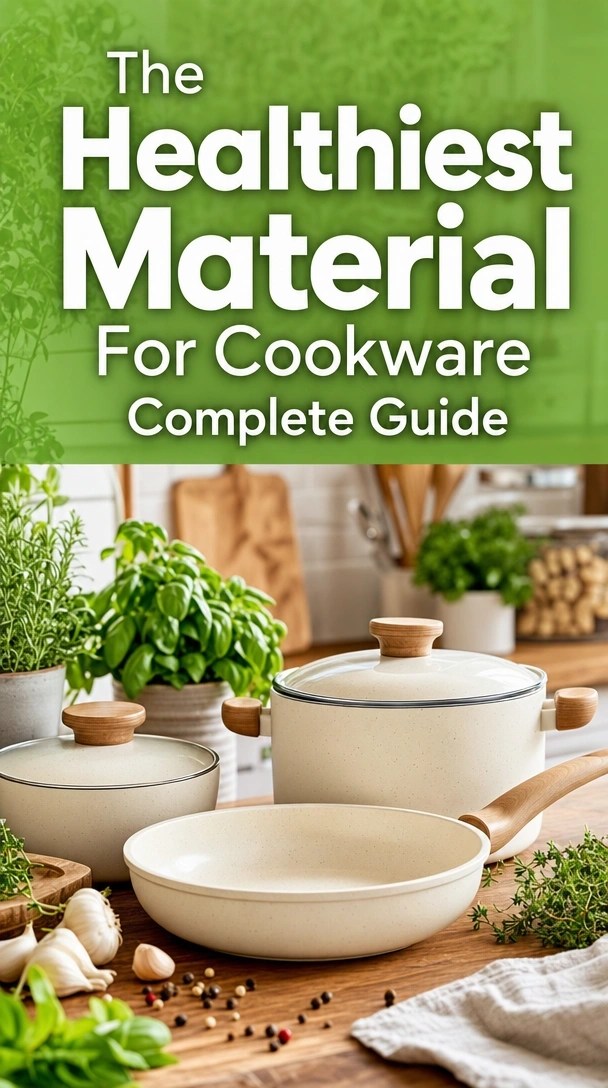
The healthiest materials for cookware are uncoated stainless steel, enameled cast iron, and 100% pure ceramic. These materials are highly recommended by culinary and health experts because they are inherently free of toxic chemicals like PFAS, PTFE, and PFOA. They provide a completely inert cooking surface that will not leach heavy metals or synthetic compounds into your food, even at high temperatures.
To immediately improve your kitchen’s safety profile as of September 2026, you should focus on these three core materials:
* High-Quality 18/10 Stainless Steel: A bare metal alloy that prevents nickel chromium leaching and offers an indestructible, permanently safe surface.
* Pure and Enameled Cast Iron: Bare cast iron naturally leaches safe dietary iron, while enameled versions use a vitreous glass coating for zero reactivity.
* 100% Pure Ceramic: Kiln-fired earth minerals that contain absolutely no metals, glazes with lead, or nonstick polymers.
Unlike budget nonstick pans that bury synthetic polymers under vague “green” marketing, these three options represent the scientific consensus on cookware safety. They completely avoid the dangerous process of chemical leaching, setting the stage for a lifetime of healthy meal preparation.
What Is The Difference Between Uncoated And Coated Cookware?
Uncoated cookware is made from a single solid material like stainless steel or cast iron, meaning there is no chemical layer that can chip or off-gas. Coated cookware uses a secondary chemical layer applied to a metal base to create a nonstick surface. Understanding this distinction is critical for evaluating non-toxic cookware materials.
Think of uncoated metal pans like solid hardwood floors, while coated pans are like painted wood. When you scratch solid hardwood, you just expose more hardwood. When you scratch painted wood, the protective layer fails, exposing the vulnerable core underneath. Uncoated pans rely on raw metal that is inherently stable, whereas coated pans rely on chemical adhesives and polymers (PTFE, sol-gel) that inevitably degrade under thermal stress.
| Cookware Type | Longevity & Sustainability | Chemical Degradation Risk |
|---|---|---|
| Uncoated (Stainless/Cast Iron) | Lifelong (10-50+ years) | Zero (No chemical layers applied) |
| Coated (Teflon/Ceramic) | Short-term (1-3 years) | High (Coatings blister, chip, and off-gas) |
Over a 10-year period, investing in uncoated stainless steel actually saves you money and prevents multiple coated pans from ending up in landfills. Material scientists consistently find that bonded coatings fail under thermal stress compared to solid alloys.
What Are The Dangers Of Teflon And PFOA?
The primary danger of Teflon (PTFE) is thermal degradation. When heated above 500°F (260°C), the synthetic coating begins to break down, emitting toxic fumes that cause polymer fume fever in humans and are fatal to pet birds. Additionally, older nonstick pans may contain PFOA, a toxic “forever chemical” that accumulates in the human body.
Understanding the exact dangers of Teflon and PFOA requires a brief look into polymer chemistry. PTFE (polytetrafluoroethylene) is the scientific name for the brand Teflon. To manufacture this slick surface, legacy companies used PFOA (perfluorooctanoic acid) and related PFAS chemicals to bind the plastic to the metal pan. Toxicology reports on PFAS bioaccumulation confirm these chemicals linger indefinitely in the human bloodstream.
The temperature thresholds for PTFE degradation are alarmingly easy to reach on a standard home stove. Teflon can reach 500°F in just 2.5 minutes on a high gas flame.
- Below 400°F (204°C): The PTFE coating remains relatively stable, though micro-abrasions can still release physical flakes into food.
- At 500°F (260°C): Thermal degradation begins. Invisible, toxic PTFE fumes are released into the kitchen air.
- At 660°F (348°C): The coating severely breaks down, releasing at least six distinct toxic gases known to trigger flu-like symptoms in humans (polymer fume fever).
While modern regulations by the European Food Safety Authority (EFSA) and FDA have restricted PFOA, many modern “PFOA-free” pans still contain related, under-tested PFAS chemicals.
Is Stainless Steel Healthier Than Ceramic Cookware?
Stainless steel is healthier for long-term use than ceramic-coated cookware. While both are initially free of PTFE and PFOA, ceramic coatings rely on a sol-gel silica layer that breaks down after 1 to 3 years of use. High-quality 18/10 stainless steel is a bare alloy that never degrades, offering a permanently inert cooking surface.
When comparing uncoated stainless steel vs ceramic coated health benefits, we must look at the lifespan of the materials. Ceramic-coated pans utilize a sol-gel technology—a silica-based (sand) spray baked over an aluminum core. This is completely non-toxic on day one. However, as the pan experiences heating and cooling cycles, the silica layer develops micro-abrasions. These abrasions fill with carbonized oil, destroying the nonstick property and eventually exposing the reactive aluminum underneath.
Conversely, 18/10 stainless steel (18% chromium for rust resistance, 10% nickel for shine and structural stability) creates a natural chromium passivation layer. This microscopic layer heals itself when scratched, meaning the pan remains chemically inert for decades.
| Feature/Safety Aspect | 18/10 Stainless Steel | Ceramic-Coated Cookware |
|---|---|---|
| Surface Inertness | Highly stable; forms chromium passivation layer | Stable initially; silica layer degrades over time |
| Toxic Fumes | Zero risk at any temperature | Zero risk of PTFE/PFAS fumes |
| Lifespan / Durability | Lifelong; decades of safe use | 1 to 3 years before nonstick layer fails |
| Scratch Resistance | Excellent; safe with metal utensils | Poor; requires wooden or silicone utensils |
Can Nickel From Stainless Steel Cookware Leach Into Acidic Food?
While high-quality stainless steel is highly stable, simmering highly acidic foods for long periods can cause trace amounts of nickel and chromium to leach into the food. Individuals with severe nickel allergies should opt for nickel-free 18/0 stainless steel or enameled cast iron.
This represents an advanced nuance in the stainless steel plus food safety discussion. If you are simmering a highly acidic tomato sauce for three hours in a brand-new stainless steel pot, minor intergranular corrosion can occur. Trace metals transfer into the food. However, research indicates these amounts are well below FDA safety limits for the average person.
For those experiencing a nickel allergy flare up from stainless steel, dermatologist-recommended nickel-free steel (known as 18/0 ferritic stainless steel) provides a perfectly safe alternative. Sautéing onions or frying an egg for five minutes poses virtually zero leaching risk regardless of the alloy.
Step-by-Step: Preheating Stainless Steel Correctly to Prevent Sticking
- Heat the dry pan: Place the bare stainless steel pan on medium heat for 2 to 3 minutes.
- Perform the water drop test: Splash a few drops of water into the pan; if they bead up and glide across the surface like mercury, the pan is ready.
- Add the cooking oil: Pour in a high-smoke-point oil and let it heat for 15 seconds until it shimmers.
- Add the food: Place proteins or vegetables into the pan; the heat creates a temporary nonstick barrier between the metal and the food.
Is Cast Iron Cookware Safe For Everyday Use?
Cast iron is one of the safest materials for everyday cookware. Bare cast iron is 100% free of synthetic chemicals and naturally leaches small amounts of beneficial dietary iron into food. Enameled cast iron is coated with an inert glass layer, making it completely non-reactive and safe for cooking highly acidic foods without iron leaching.
When asking is cast iron cookware safe for everyday use, you must separate bare metal from enameled products. Bare cast iron is completely non-toxic, but it is reactive. It binds iron minerals to food during the cooking process. Nutritional science confirms this dietary iron absorption is highly beneficial for those with anemia, though individuals with hemochromatosis (iron overload) should be cautious.
- Bare Cast Iron: Requires natural oil seasoning (polymerized cooking oil baked into the iron) to prevent rust and create a nonstick surface. It naturally leaches safe dietary iron.
- Enameled Cast Iron: Features a vitreous enamel glass coating inertness. It requires no seasoning, will not rust, and prevents all metallic leaching.
Is Enameled Cast Iron Safer Than Bare Cast Iron?
Enameled cast iron is coated with a highly stable, inert glass layer that prevents the iron from reacting with acidic foods. It is considered safer for long simmers of tomato or wine-based sauces compared to bare cast iron, which can leach metallic flavors.
Comparing enameled cast iron vs bare cast iron safety comes down to the food you are cooking. Enameled cast iron utilizes vitreous enamel (melted glass powder fused to the metal) to create a barrier. This means you get the incredible heat retention of iron without any chemical reactivity.
High-quality enamel prevents the need for seasoning, solving a major user pain point. While bare cast iron is entirely safe, the enameled version provides peace of mind when slow-cooking acidic ingredients that would otherwise strip a raw iron pan’s seasoning.
Is Ceramic Coated Cookware Completely Non Toxic?
Ceramic-coated cookware is completely non-toxic and free of “forever chemicals” like PFAS and PTFE. Instead of synthetic polymers, these pans use a silica-based sol-gel coating derived from sand. While highly safe for food contact, the coating degrades quickly under high heat, often losing its nonstick properties within one to two years.
Many consumers are skeptical about whether ceramic coated cookware is completely non-toxic. The truth lies in the manufacturing process. Over 95% of “ceramic pans” on the market are actually aluminum pans sprayed with a sol-gel nonstick coating technology. Third-party lab verification confirms these are genuinely PFAS-free.
However, material scientist cookware analysis shows that organosilicon polymers degrade under high heat. Micro-abrasions trap carbonized oils, destroying the slick surface.
Warning: A chipped ceramic coating safety risk occurs when deep scratches expose the reactive aluminum core underneath. Once a ceramic pan is heavily scratched with metal cooking tools, it should be replaced to prevent aluminum leaching into your food.
What Is 100 Percent Pure Ceramic Cookware?
100 percent pure ceramic cookware is made entirely from natural clay, minerals, and water, fired in a kiln. Unlike ceramic-coated aluminum, pure ceramic contains no metal core, making it completely inert, non-reactive, and free of any chemical coatings.
Certified 100 percent pure ceramic represents the gold standard for an inert cooking surface. It is essentially cooking inside a highly durable, stovetop-safe coffee mug. Modern pure ceramic brands are California Proposition 65 compliant, utilizing laboratory-tested lead-free certification to ensure historical heavy metal glaze concerns are entirely eliminated.
- Pros: Zero heavy metals, zero synthetic coatings, 100% non-reactive with acidic foods, retains heat exceptionally well.
- Cons: Extremely heavy, poor thermal conductivity (heats up slowly), and carries a risk of thermal shock if moved rapidly from hot to cold environments.
Which Material Is Best For High Heat Cooking Without Toxins?
Carbon steel and cast iron are the best materials for high-heat cooking without toxins. Because they are uncoated, solid metal alloys, they can safely endure stovetop temperatures above 600°F (315°C) without off-gassing toxic fumes. Carbon steel is highly favored by professional chefs for its lighter weight and natural, chemical-free nonstick seasoning.
Finding the best non-toxic pan materials for everyday cooking, especially searing, requires looking at bare metal high heat tolerance. Ceramic coatings degrade rapidly under high heat, and PTFE releases toxic fumes. Chef-tested non-toxic cookware standards highlight carbon steel as the ultimate solution.
Carbon steel is essentially a lighter, smoother cousin to cast iron. It seasons exactly the same way, building a polymerized oil layer that acts as a natural nonstick barrier. NSF certified commercial kitchenware relies heavily on carbon steel because it withstands extreme thermal shock while remaining completely safe.
| Cookware Material | High Heat Safety (500°F+) | Toxin Risk at High Heat | Best Culinary Use Case |
|---|---|---|---|
| Carbon Steel | Excellent (Up to 1200°F) | None (100% Uncoated) | High-heat searing, wok frying |
| Cast Iron | Excellent (Up to 1500°F) | None (100% Uncoated) | Searing meats, baking |
| Stainless Steel | Very Good (Up to 800°F) | None (Chromium layer stable) | Deglazing, acidic sauces, boiling |
| Ceramic Coated | Poor (Coating degrades) | Low (No PFAS, but coating fails) | Low-heat egg cooking only |
| PTFE (Teflon) | Dangerous (> 500°F) | High (Toxic PTFE fumes released) | Avoid high heat entirely |

FAQs About what is the healthiest material for cookware
Does aluminum cookware leach into food?
Yes, bare aluminum cookware is highly reactive and will leach metallic compounds into your food, especially when cooking acidic ingredients like tomatoes or citrus.
To cook safely with aluminum, it must be “hard-anodized” (an electrochemical process that locks the metal) or fully encapsulated within stainless steel. While the link between aluminum exposure and Alzheimer’s is highly debated in scientific communities, avoiding bare aluminum remains a standard food safety practice.
How do I know if my ceramic pan has lead?
You can verify your ceramic pan is lead-free by checking for a “California Proposition 65 Compliant” certification or requesting third-party lab testing results from the manufacturer.
Historically, the glazes used to give ceramic cookware its color and shine contained heavy metals like lead and cadmium. Modern, reputable cookware brands strictly adhere to FDA guidelines and rigorously test their glazes to ensure zero heavy metal migration into food.
Is carbon steel healthier than nonstick cookware?
Carbon steel is significantly healthier than traditional nonstick (PTFE) cookware because it contains zero synthetic chemicals, plastics, or toxic coatings.
Composed of 99% iron and 1% carbon, carbon steel achieves a naturally nonstick surface through “seasoning” (baked-on cooking oils). It safely withstands extreme temperatures up to 1200°F without off-gassing, whereas traditional nonstick pans release toxic fumes at 500°F.
What is the healthiest material for frying pans?
The healthiest materials for frying pans are carbon steel, cast iron, and high-quality stainless steel.
Frying requires high temperatures that rapidly degrade ceramic coatings and cause PTFE (Teflon) coatings to emit toxic fumes. Uncoated metals like carbon steel and cast iron are the safest choices for frying because they handle high heat effortlessly and build a natural, chemical-free nonstick seasoning.
What is the healthiest material for baking pans?
The healthiest materials for baking pans are tempered glass, pure ceramic, and uncoated stainless steel.
Because bakeware is subjected to prolonged high heat in the oven, avoiding synthetic nonstick coatings is crucial. Tempered glass (like Pyrex) and pure ceramic are completely inert and will not leach chemicals into baked goods. Uncoated stainless steel is highly durable and completely safe for roasting vegetables or meats.
Is glass cookware the safest option?
Glass cookware is widely considered one of the safest and most inert materials available, as it is 100% non-reactive and chemical-free.
It will never leach heavy metals, odors, or flavors into your food, regardless of acidity. However, glass is primarily used for bakeware rather than stovetop cooking because it lacks the thermal conductivity of metals and is susceptible to thermal shock (shattering if moved rapidly from hot to cold).
What non toxic cookware does not scratch easily?
Uncoated stainless steel, bare cast iron, and carbon steel are the most scratch-resistant non-toxic cookware materials.
Because these pans are solid metal alloys with no applied coatings, they cannot be chipped or scratched in a way that compromises their safety. You can safely use metal spatulas, whisks, and forks in these pans without fear of releasing toxic flakes into your meals.
Which cookware material lasts the longest without toxic breakdown?
High-quality 18/10 stainless steel and bare cast iron offer the longest lifespans, frequently lasting for decades or generations without any toxic breakdown.
Unlike ceramic-coated or PTFE pans, which inevitably lose their nonstick properties and degrade within 1 to 5 years, solid metal pans have no chemical layer to wear away. A cast iron skillet or stainless steel pot bought today will remain completely safe to use 50 years from now.
Are cheap nonstick pans toxic?
Cheap nonstick pans pose a higher toxicity risk because they often use low-grade PTFE coatings that degrade faster and may contain legacy PFAS chemicals.
Budget-priced nonstick cookware typically features a thinner aluminum base that heats unevenly, creating “hot spots” that cause the coating to quickly exceed the 500°F safe threshold. This rapid degradation leads to flaking and the release of toxic polymer fumes.
What is the healthiest alternative to Teflon?
The healthiest nonstick alternatives to Teflon (PTFE) are seasoned carbon steel, seasoned cast iron, and ceramic-coated cookware.
If you want a traditional nonstick experience right out of the box, ceramic-coated pans (sol-gel) are completely free of PFAS and PTFE, though they have a shorter lifespan. If you want a lifelong, chemical-free nonstick surface, seasoned carbon steel and cast iron are the superior, professional-grade alternatives.
Key Takeaways: Healthiest Cookware Material Summary
- Uncoated Metals Are The Safest Standard: High-quality 18/10 stainless steel, bare cast iron, and carbon steel are the healthiest materials because they contain zero synthetic chemical coatings that can degrade or off-gas.
- Teflon (PTFE) Poses High-Heat Risks: Traditional nonstick pans break down at temperatures above 500°F (260°C), releasing toxic polymer fumes. They should never be used for searing or high-heat frying.
- Ceramic Coatings Are Safe But Temporary: Ceramic-coated pans are a great PFAS-free alternative to Teflon, using a sand-derived sol-gel coating. However, this coating degrades quickly, typically losing its nonstick ability within 1 to 3 years.
- Pure Ceramic vs. Coated Matters: 100% pure ceramic (kiln-fired clay) is completely inert and will never leach metals, but it lacks the thermal conductivity of metal pans and is prone to breaking.
- Cast Iron Naturally Leaches Beneficial Minerals: Cooking in bare cast iron naturally transfers small amounts of dietary iron into your food, which is perfectly safe and often beneficial for those with iron deficiencies.
- Enameled Cast Iron Is The Ultimate Non-Reactive Option: For long simmers of highly acidic foods (like tomato sauce), enameled cast iron provides a completely inert, glass-like surface that prevents metallic leaching and requires no seasoning.
- Carbon Steel Is The Chef’s Choice: For high-temperature searing without toxins, carbon steel offers the durability of cast iron with a lighter weight, building a natural, chemical-free nonstick surface over time.
Final Thoughts on The Healthiest Material For Cookware
Transitioning to the healthiest cookware materials involves removing scratched Teflon pans and replacing them with a mix of uncoated stainless steel, seasoned cast iron, and high-quality ceramic for everyday safe cooking. Identifying the top non-toxic cookware materials ranked for your specific kitchen habits ensures you protect your family from chemical leaching.
Remember, there is no single perfect pan for every culinary task. Building an eco-friendly kitchen cookware setup requires a strategic approach. We recommend utilizing uncoated stainless steel for boiling water and acidic sauces, seasoned cast iron or carbon steel for high-heat searing, and a high-quality ceramic-coated pan specifically reserved for low-heat egg cooking.
By understanding the science behind thermal degradation and heavy metal inertness, you can confidently invest in kitchen tools that support your long-term health. Take a moment today to audit your current pots and pans, and begin swapping out any heavily scratched nonstick surfaces for durable, lifetime-safe uncoated metals.
Last update on 2026-09-19 at 21:31 / Affiliate links / Images from Amazon Product Advertising API
