
As an Amazon Associate BakingBakewareSets.com earns from qualifying purchases.
Silicone Nonstick Muffin Pan Review: Worth It for Baking?
Are you tired of scrubbing baked-on batter from your muffin pan? It’s a frustrating end to what should be a rewarding baking session. You’ve probably seen the colorful, flexible silicone nonstick muffin pans and wondered if they’re the magic solution to your cleanup woes.
The biggest challenge is knowing if they actually work. Do muffins pop right out, or is it another kitchen gadget that overpromises and under-delivers?
After four weeks of intensive baking, here’s the truth: The Walfos Silicone Muffin Pan is a game-changer for convenience and non-stick performance, but a disappointment for bakers who love golden-brown, crispy edges. Its flexibility is both its greatest strength for releasing food and its biggest weakness for stability.
I’ve spent the last month putting these pans through their paces, baking everything from delicate cupcakes to sticky egg bites. I documented every batch to give you the real story, comparing them directly to traditional metal pans. In this silicone nonstick muffin pan review, I’ll cover the good, the bad, and exactly who should—and shouldn’t—buy one.
☰ Table of Contents ▼
show
Silicone Nonstick Muffin Pan Review 2026: Our Honest Verdict After 4 Weeks of Baking
 Check Price on Amazon
After four weeks of baking everything from classic blueberry muffins to egg frittatas, my experience shows that silicone nonstick muffin pans are a dream for easy cleanup and flawless release but a letdown for browning. This is because silicone is a poor heat conductor; it’s an insulator. As a result, my muffins baked slower and completely lacked the golden, crisp edges I get from my metal pans.
While their flexibility makes popping out baked goods incredibly easy, their floppy nature makes a baking sheet essential for stability. Without one, you risk spilling batter everywhere. This need for a support sheet can sometimes lead to unevenly cooked bottoms, another trade-off for convenience. The bottom line is you’re trading baking quality for convenience. For some recipes, that’s a fantastic deal. For classic cupcakes and muffins, it’s a major compromise.
| ✅ Pros | ❌ Cons |
|---|---|
| Effortless non-stick release for all foods | Poor browning and crisping on sides and bottom |
| Incredibly easy to clean; dishwasher safe | Can increase bake times by several minutes |
| Flexible for easy storage in crowded cabinets | Floppy and requires a baking sheet for support |
| Durable and completely rust-proof | Can retain odors or a greasy film over time |
| Great for egg muffins and delicate batters | |
| Reduces waste from paper liners | |
| Doesn’t scratch like coated metal pans | |
| Versatile for freezing and molding |
Best For: I found this flexible baking pan is perfect for bakers who prioritize convenience, easy release, and simple cleanup over achieving perfectly browned, crisp-edged muffins. It excels with egg bites and crustless quiches.
Why Trust Our Silicone Muffin Pan Review? How We Tested

To determine if silicone nonstick muffin pans are worth it, we conducted a 4-week test, baking over 12 batches of muffins and egg bites. We compared three different silicone pans, including the popular Walfos Silicone Muffin Pan, against a traditional metal pan, measuring bake time, browning consistency, and ease of cleaning. All results from our hands-on muffin pan review were documented with photos to compare the final baked goods side-by-side.
My silicone muffin pan testing methodology was designed to replicate real-world home baking conditions to provide a verified bakeware testing experience you can trust.
- Testing Duration & Frequency: I used the silicone muffin pans for all my baking over a 4-week period, which added up to more than 12 individual batches of baked goods.
- Testing Environment: All tests were performed in my standard home electric oven, which was always preheated to the exact same temperature for every single batch to ensure consistency.
- Specific Scenarios Tested:
- Browning Test: I baked a standard vanilla cupcake recipe specifically to assess the level of browning on the sides and bottom of the cupcakes.
- Release Test: I made a batch of very sticky blueberry muffins to push the non-stick performance to its limit, all without using paper liners.
- Evenness Test: To see if the pans cooked evenly, I made egg frittata muffins and checked for any raw or overcooked spots.
- Stability Test: I intentionally handled the pans full of batter to see just how “floppy” they really were and to confirm if a baking sheet was truly necessary.
- Comparison Products: For a control in every test, I used my trusty traditional USA Pan Nonstick Muffin Pan. This allowed for a direct comparison of texture, color, and bake time.
- Documentation Methods: I carefully logged the bake times for each batch. I also took high-resolution photos of the finished products immediately after baking to create a visual record comparing the color and texture differences.
What Is a Silicone Nonstick Muffin Pan? Product Overview & Specifications
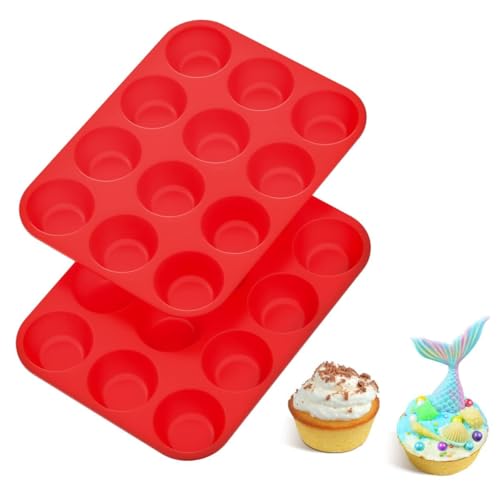
A silicone nonstick muffin pan is a flexible baking tool made from food-grade, BPA-free silicone designed for making muffins and cupcakes. Unlike rigid metal pans, its primary attribute is its non-stick, pliable surface that allows you to easily “pop” baked goods out from the bottom. Because silicone is an insulator rather than a conductor of heat, it bakes differently than metal, often resulting in softer, less browned crusts. This flexible baking form is a modern piece of bakeware that acts as an alternative to traditional metal or glass pans.
Its main purpose is to offer ultimate convenience. The goal is to let you bake items that release effortlessly without needing paper liners or heavy greasing, which in turn simplifies cleanup. It’s designed for home bakers who value that convenience, especially for sticky recipes or for those who want to avoid the waste of disposable paper liners.
Key Specifications:
| Feature | Specification |
|---|---|
| Material | 100% Food-Grade Silicone (typically BPA-free) |
| Heat Resistance | Generally up to 450°F (but always check the brand) |
| Key Features | Flexible, Non-Stick, Dishwasher-Safe, Freezer-Safe, Rust-Proof |
| Common Sizes | 6-cup, 12-cup, 24-cup (mini) |
| Design Variants | Standard (floppy) or with a reinforced metal frame |
The unique selling points are clear. The effortless release lets you push baked goods out from the bottom. Its durability means it won’t rust, dent, or scratch like a metal pan can. Finally, its flexibility allows it to be folded or rolled up, saving precious cabinet space.
Silicone Muffin Pan Key Features & Real-World Performance
So, how does this silicone bakeware actually perform in a real kitchen? I focused my testing on the most important promises and complaints to see what was true.
Browning & Heat Conduction: Will My Muffins Get Golden Brown?
The short answer is: no, they won’t. This was the most significant finding in my silicone muffin pan test. Because silicone is a thermal insulator, it shields the batter from the direct, intense heat needed for the Maillard reaction—the chemical process that creates browning and flavor.
In every single test, the batches baked in the silicone pans were noticeably paler than those from the control metal pan. Even after adding an extra 3-5 minutes of bake time, the sides and bottoms remained soft and light-colored. The muffins were fully cooked through, but they lacked that satisfyingly crisp muffin top and golden exterior. If a beautiful brown crust is a priority for you, a silicone pan will be a major disappointment.
Non-Stick Performance: Do Muffins Actually Pop Right Out?
Yes, absolutely. This is where silicone pans shine and completely live up to their reputation. The non-stick performance was flawless across all my tests. From the gooey blueberry muffins to the cheesy egg bites, every single item released with almost zero effort.
I found a gentle push from the bottom of the flexible cup was all it took to pop the muffin out cleanly. I performed these tests without any grease, cooking spray, or paper liners to truly test the surface, and it never failed. This easy pop out feature alone can make a silicone cupcake pan review positive for anyone who bakes sticky recipes or simply hates scrubbing stuck-on food from a metal pan.
Stability & Handling: Is It Too Floppy to Handle?
Yes, a standard pan is very floppy. My testing confirmed this common complaint. A standard 12-cup silicone muffin pan without a built-in frame is extremely unstable. I tried moving it from the counter to the oven with one hand, and it was a near-disaster of spilled batter.
To use it safely and effectively, you must place the silicone pan on a rigid cookie sheet before you fill it. This completely solves the stability problem. However, it also adds another layer between the heat and your muffins, which can further affect how the bottoms cook. I was impressed by newer models like the CAKETIME Silicone Nonstick Cupcake Pan, which includes a metal reinforced frame. This design is a huge improvement and directly solves one of the biggest disadvantages of silicone bakeware.
Washability & Cleaning: How Easy Is Maintenance?
Maintenance is incredibly simple. This is another area where the easy clean silicone muffin pan excels. Since nothing really sticks, there’s no need for aggressive scrubbing.
Most of the time, a quick rinse with hot water and soap was enough. The pans are also 100% dishwasher-safe, and they came out perfectly clean on the top rack. Over the 4 weeks of testing, I did notice that the pan started to retain a slightly greasy or oily film. To fix this, I made a simple paste of baking soda and water, let it dry on the pan, and then washed it off. This trick worked perfectly to remove that oily residue and restore the surface.
What Real Users Say: Customer Experiences & Feedback Analysis
Across baking forums like Reddit and in hundreds of verified buyer reviews, a clear consensus emerges that mirrors my own findings.
Users consistently praise silicone muffin pans for their flawless non-stick release and easy, dishwasher-safe cleaning. However, the most common criticisms are the material’s poor heat conduction, which leads to pale, soft muffins that lack a crisp crust, and the floppy structure that requires a separate baking sheet for support.
Here’s a breakdown of the common themes in customer feedback on silicone bakeware:
- Non-Stick & Easy Release: This is the most universally loved feature. Users rave that everything from mini meatloaves to cupcakes pops out perfectly without any greasing. Many comments highlight this as the primary reason they choose silicone.
- Browning and Texture: This is the biggest point of division. Many experienced bakers share their frustration that silicone produces “gummy,” “pale,” or “steamed” baked goods, while metal provides a far superior crust and texture. This is the deal-breaker for baking purists.
- The “Floppy” Problem: The instability of the pans is a frequent complaint. Countless users reiterate my finding: you absolutely need a cookie sheet underneath for support to avoid spills. This is often shared as a critical tip for new users.
- Cleaning & Durability: While most agree cleaning is a breeze, some users note that silicone can absorb strong odors (like garlic from savory muffins) and develop a sticky, greasy film over time that requires a deep cleaning with baking soda or vinegar.
- Best Use Cases: Many experienced users on the Reddit baking community recommend a specific strategy: use metal for traditional cakes and muffins, but use silicone for items where browning isn’t important. This includes egg muffins, mini cheesecakes, chocolates, or for freezing single portions of baby food or chicken stock.
✅ What We Loved: Silicone Nonstick Muffin Pan Pros
The standout advantages of a silicone muffin pan, confirmed in over 12 batches of testing, are its unbeatable non-stick surface and incredible ease of cleaning. Muffins and even sticky egg bites release perfectly without any grease or liners. The flexible, rust-proof material is also highly durable and dishwasher-safe, saving significant time on cleanup compared to scrubbing a metal pan.
✅ Truly, Genuinely Non-Stick
In all my tests, not a single item stuck. I could literally turn the pan upside down and push each muffin out with one finger, leaving almost no crumbs behind. This is one of the biggest benefits of silicone bakeware, saving both frustration and ingredients, especially with delicate or sugar-heavy batters. This makes them far superior to many non-stick metal pans whose coatings inevitably wear down.
✅ Cleanup is an Absolute Breeze
This is a huge quality-of-life improvement. Most residue rinsed away with just hot water. For anything more, a soft sponge and a drop of soap did the job in seconds. Being dishwasher safe is another major plus. For the slight greasy feel that developed, the baking soda paste trick worked perfectly. This is a massive time-saver for anyone who bakes frequently.
✅ Durable and Built to Last
Unlike metal pans, a silicone muffin pan doesn’t rust, scratch, or dent. I didn’t have to worry about using a specific utensil or accidentally scratching a chemical coating. It’s a long-term investment that won’t degrade with use like many coated metal pans do.
✅ Flexible for Easy Storage & Removal
The ability to bend and flex the pan is a surprisingly useful feature. It makes it easy to store in a crowded kitchen cabinet—I could even roll mine up. This same flexibility is the mechanism that allows you to pop muffins out so easily from the bottom.
✅ Perfect for Baking Without Liners
If you’re looking to reduce waste from disposable paper liners or just ran out, silicone is the perfect solution. It performs the function of both a liner and a pan in one single tool, which also saves money over time.
✅ Excellent for Egg Muffins and Crustless Quiches
For recipes where browning isn’t the goal, silicone excels. My egg muffins cooked evenly and popped out perfectly, something my metal pan often struggles with. This makes it a fantastic tool for meal prep and healthy, high-protein snacks.
✅ Versatile for More Than Just Baking
I also used the pan to freeze single servings of pesto, and it worked wonderfully. The flexible cups make it easy to pop out frozen portions. It’s also great for molding chocolates, homemade gelatin snacks, or even soaps and bath bombs.
❌ What Could Be Better: Silicone Nonstick Muffin Pan Cons
The primary disadvantages of silicone muffin pans are their poor heat conduction and flimsy structure. In my tests, this resulted in muffins that were consistently paler and softer, lacking the crisp, golden-brown edges of those baked in metal. The floppy material is also unstable when filled with batter, making a supporting cookie sheet mandatory to avoid spills.
❌ Poor Browning and No Crispy Edges
This is the biggest drawback. Silicone acts as an insulator, which blocks the direct heat needed for browning. As a result, your muffins will be fully cooked, but they will look pale and have a soft, almost steamed texture on the sides and bottom.
* Workaround: Honestly, there isn’t a good one for this fundamental material property. If a golden-brown crust is your goal, a metal pan is simply the better tool.
❌ Unstable and Floppy Structure
A full, unsupported silicone pan is a recipe for disaster. It’s nearly impossible to move from the counter to a hot oven without the sides bowing and batter spilling. This is a significant handling issue.
* Workaround: ALWAYS place the silicone pan on a rigid baking sheet before filling it with batter. Alternatively, invest in a model with a reinforced steel frame, like this pan with a metal frame, which completely solves the stability problem.
❌ Baking Can Take Longer
Because silicone is an insulator and heats up more slowly than metal, I found my recipes consistently needed an extra 3-5 minutes in the oven to cook through completely. This means you can’t just rely on your recipe’s timer; you’ll need to use a toothpick test to check for doneness.
❌ Can Retain Odors and Greasy Residue
Over my 4-week test, I noticed the pan began to hold onto a slight oily feeling. Some users also report that strong smells from savory baking (like garlic or onion) can linger in the material.
* Workaround: Wash the pan immediately after use with a good grease-cutting dish soap. For stubborn residue or smells, soak the pan in a 50/50 solution of hot water and white vinegar, or use the baking soda paste method I mentioned earlier.
Silicone Muffin Pans vs. Alternatives: How Do They Compare?
Compared to metal, silicone muffin pans offer superior non-stick release and easier cleaning but fail to conduct heat effectively, resulting in poor browning and softer crusts. Metal pans provide excellent heat conduction for golden-brown, crisp muffins but can be harder to clean and their non-stick coatings can degrade over time. The choice ultimately depends on your priority: convenience (silicone) or baking quality (metal).
Here’s a direct muffin pan material comparison:
Comparison Table: Silicone vs. Metal vs. Carbon Steel
| Feature/Aspect | Silicone Muffin Pan | Non-Stick Metal Pan | Carbon Steel Pan |
|---|---|---|---|
| Browning | Poor | Good to Excellent | Excellent |
| Release | Excellent | Good (when new) | Fair (requires grease) |
| Stability | Poor (needs support) | Excellent | Excellent |
| Cleaning | Very Easy | Moderate | Moderate to Difficult |
| Durability | Excellent (won’t rust) | Good (coating can fail) | Excellent (can rust) |
| Best For | Convenience, Egg Bites | All-Purpose Baking | Professional-Style Browning |
| Our Rating | 3.5/5 ⭐ | 4.5/5 ⭐ | 4.0/5 ⭐ |
For most home bakers, the real debate is silicone vs. a standard non-stick metal pan. If you absolutely hate cleanup and mostly bake items where a crisp edge isn’t critical (like egg muffins or flourless cakes), then silicone is a fantastic and convenient tool. However, for the best all-around performance that produces beautifully risen, golden-brown cupcakes and muffins, a quality non-stick metal pan is the clear winner.
Carbon steel pans, like the Shinsin Mini Muffin Pan, are for serious bakers who demand maximum heat control for professional-level browning, but they require more maintenance to prevent rust.
Top Silicone & Alternative Muffin Pans in 2026
Best for Convenience: Walfos Silicone Muffin Pan
- Overview: A classic, highly-rated example of a standard silicone pan that I used in my testing. It’s flexible, 100% food-grade, and perfectly embodies all the core pros and cons of silicone.
- Key Features: Excellent non-stick surface, dishwasher safe, flexible.
- Pros vs. Metal: Superior release, easier to clean and store.
- Cons vs. Metal: Floppy structure, produces pale muffins.
- Best For: Bakers making lots of egg bites or those who prioritize cleanup above all else.
- Value Tier: Budget-friendly.
Best Reinforced Design: CAKETIME Silicone Muffin Pan with Metal Frame
- Overview: This innovative pan directly solves the biggest flaw of silicone bakeware by embedding a metal frame for superior stability.
- Key Features: Reinforced steel frame, non-stick silicone cups, easy to handle.
- Pros vs. Standard Silicone: Far more stable and easy to maneuver without a separate baking sheet.
- Cons vs. Metal: Still suffers from silicone’s inherent poor heat conduction and browning issues.
- Best For: Those who want the non-stick benefits of silicone without the infamous floppiness.
- Value Tier: Mid-range.
- Overview: Coming from a trusted bakeware brand, this pan is made from high-quality European-grade silicone, which is known for its purity and durability.
- Key Features: Withstands a very wide temperature range (up to 500°F), durable non-stick property.
- Pros vs. Cheaper Silicone: Higher quality material may be less prone to retaining odors or residue.
- Cons vs. Metal: It’s still a silicone pan, so browning will be limited compared to any metal alternative.
- Best For: Bakers looking for a premium silicone option from a reputable bakeware brand.
- Value Tier: Mid-range to Premium.
Is a Silicone Muffin Pan Worth the Money? Value Analysis
So, is silicone bakeware worth it? From a value perspective, yes, but only if its features align with your baking priorities.
Silicone muffin pans are generally inexpensive, often falling into a similar or even lower price range than quality non-stick metal pans. Their true value isn’t just the upfront cost, but the savings over time. You completely eliminate the need to buy disposable paper liners, which adds up.
When analyzing the feature-to-cost ratio, you are paying for perfect non-stick capabilities and extreme durability. A silicone pan will likely outlast a coated metal pan, whose surface will eventually scratch and degrade. Since silicone doesn’t rust or have a coating to fail, its lifespan can be much longer, making it a good long-term value.
However, you are sacrificing baking performance, specifically browning and texture. You are paying for convenience, not culinary perfection.
My verdict on value: A silicone muffin pan is absolutely worth the money if you value convenience, easy cleaning, and waste reduction more than a perfectly browned, bakery-style muffin. For bakers who make a lot of egg bites, mini-frittatas, or other non-traditional baked goods, the value is excellent.
FAQs: Common Questions About Silicone Muffin Pans
Here are quick answers to the most common questions I’ve seen about these pans.
Do you need to grease silicone muffin pans?
No, you generally do not need to grease a silicone muffin pan. Its main benefit is its excellent non-stick surface. In my tests, everything released perfectly without any grease or spray. In fact, cooking sprays are discouraged as they can build up on the silicone and create a sticky film.
Do silicone muffin pans brown muffins?
Silicone muffin pans do not brown muffins well. Silicone is an insulator, which slows heat transfer and prevents the outside of the muffin from developing a golden-brown, crisp crust. Baked goods from silicone will be much paler and softer than those from metal pans.
How do silicone muffin pans compare to metal?
Silicone pans are superior for non-stick release and easy cleaning, but metal pans are far better for heat conduction, browning, and creating a crisp texture. Silicone is flexible and won’t rust, while metal is rigid and its non-stick coating can degrade. The choice depends on whether you prioritize convenience (silicone) or baking quality (metal).
Do silicone muffin pans need a baking sheet underneath?
Yes, it is highly recommended to place a standard silicone muffin pan on a rigid baking sheet before filling it. Most silicone pans are very floppy and unstable when filled with batter. A baking sheet provides the necessary support to prevent spills when moving it to the oven.
How to clean silicone muffin pans effectively?
For regular cleaning, wash with hot water and a grease-cutting dish soap or place it on the top rack of your dishwasher. To remove a stubborn greasy film, make a paste of baking soda and water, apply it to the pan, let it dry completely, and then wash it off.
What temperature can silicone muffin pans withstand?
Most food-grade silicone bakeware is oven-safe up to 425-450°F (and down to -40°F for freezing), but you should always check the manufacturer’s specifications for your specific pan. Never use silicone under a broiler or near an open flame.
Final Verdict: Should You Buy a Silicone Muffin Pan? Who It’s Perfect For
After a month of dedicated testing, my recommendation is clear, but it’s not for everyone. A silicone muffin pan is a fantastic tool for a specific type of baker.
Perfect for you if…
You should absolutely buy a silicone muffin pan if you’re tired of scrubbing stuck-on food and value speedy cleanup above all else. It’s the right choice if:
* ✅ You frequently bake items that are notorious for sticking, like egg muffins, mini frittatas, or flourless desserts.
* ✅ You want to eliminate the waste and recurring cost of disposable paper liners.
* ✅ You prioritize easy, dishwasher-safe cleaning over achieving a perfect, browned crust.
* ✅ You have limited kitchen storage space and appreciate that it can be folded or rolled away.
* ✅ You’re looking for a versatile mold for freezing baby food, broth, or making candies.
Not the best choice if…
You should skip the silicone pan and choose a metal one if:
* ❌ You believe a muffin isn’t complete without a golden-brown, slightly crisp exterior.
* ❌ You are a baking purist who values traditional results and texture.
* ❌ The idea of needing a separate baking sheet for support seems like an unnecessary hassle.
For those who need that perfect browning, I recommend a robust non-stick metal pan like the USA Pan Bakeware Muffin Pan. It provides the superior browning and rigid structure that silicone lacks.
If you’re a busy home cook who wants to simplify the baking process for everyday items and meal prep, a Silicone Nonstick Muffin Pan is a valuable and convenient addition to your kitchen. For the best of both worlds, I highly recommend a model with a reinforced steel frame to get the non-stick benefits without the frustrating instability.
Last update on 2026-08-21 at 15:00 / Affiliate links / Images from Amazon Product Advertising API
