As an Amazon Associate BakingBakewareSets.com earns from qualifying purchases.
Creamy Mac And Cheese No Flour: Ultimate 15-Minute Recipe
Tired of your creamy mac and cheese no flour turning into a greasy, separated mess on the stovetop? You aren’t alone in struggling to achieve that perfectly velvety, rich comfort food without relying on a heavy, chalky roux to bind everything together.
Creamy Mac And Cheese No Flour: To make this silky smooth sauce, boil your pasta, then gently simmer evaporated milk and butter in a skillet. Gradually whisk in freshly shredded block cheese over low heat until perfectly emulsified, then fold in the pasta for a foolproof 15-minute meal.
Drawing from comprehensive analysis of food science and test kitchen methodologies, we have cracked the code on perfect dairy emulsification. In this guide, you will discover the exact techniques to manipulate the proper protein fat balance for a flawless, gluten-free dinner.
☰ Table of Contents ▼
show
How To Make Creamy Mac And Cheese No Flour For A Silky Smooth Meal
How to make creamy mac and cheese no flour: Begin by utilizing the concentrated proteins in evaporated milk to replace the traditional butter-and-flour roux, binding the fats and liquids into a silky smooth sauce that coats your elbow macaroni flawlessly.
Many home cooks struggle with a grainy cheese sauce fix when attempting to skip the traditional flour base. When you remove flour, you must understand the food science of cheese melting to prevent your sauce from breaking. A traditional béchamel relies on starch to keep the dairy and fat suspended. Without it, you are managing a delicate casein protein network. By mastering the proper protein fat balance, you can completely avoid fat phase separation and create an ultra creamy dish that feels incredibly light on the palate.
Expert insight on starch gelatinization alternatives: What most guides miss is that you don’t need flour to stabilize dairy. The exact thermal stability required for block cheese is best achieved using the naturally occurring emulsifying salts in American cheese or the concentrated proteins in evaporated milk. These ingredients bind water and fat seamlessly, delivering a rich texture without the gummy mouthfeel of a heavy wheat roux.
To help you decide which base works best for your fast creamy mac and cheese recipe, review this quick comparison of dairy thickeners:
| Base Type | Emulsifier Source | Texture Result | Preparation Time |
|---|---|---|---|
| Evaporated Milk | Natural Milk Proteins | Silky, ultra creamy, light | 15 Minutes |
| Traditional Roux | Wheat Flour | Thick, slightly heavy | 25 Minutes |
| Heavy Cream | Butterfat | Very rich, prone to breaking | 15 Minutes |
15 Essential Steps For Your 15-Minute Creamy Mac And Cheese No Flour
Executing a flawless 15-minute stovetop macaroni and cheese without a flour thickener requires precise sequencing. To guarantee an easy stovetop recipe, you must understand how your cavatappi pasta, gruyere cheese, and unsalted butter interact under strictly controlled temperatures. We recommend using a blend of whole milk + heavy cream or evaporated milk to create the perfect liquid base.
When these dairy components meet under low heat + no curdling conditions, they create a natural emulsion that clings to every noodle. Never use pre-shredded bagged cheese, as the anti-caking agents will actively ruin your sauce. Follow these 15 precise steps, utilizing expert chef tips and proper dairy temperature control, to build your creamy comfort food masterpiece from scratch.
1. Select Elbow Macaroni Or Cavatappi Pasta

Save this pasta selection guide to your favorite recipe board for next time!
Choosing the right pasta shape is critical for the best creamy mac and cheese recipe no flour. Because you are omitting a heavy flour binder, your sauce relies on mechanical grip to cling to the noodles. Elbow macaroni pasta and cavatappi are unmatched because their prominent ridges absorb pasta starch and coat pasta evenly. A high-quality bronze-die extruded pasta releases more starch into the water, which naturally thickens your flour free cheese sauce later on.
Ingredients
- 1 lb high-quality bronze-die extruded cavatappi pasta (the rough texture clings to the velvety texture of the sauce better than smooth noodles).
- 1 tbsp kosher salt (for the boiling water to enhance flavor).
Directions
- Examine your pasta choices, looking specifically for tubular shapes with ridges (rigate) to trap the rich comfort food sauce.
- Measure exactly 16 ounces of pasta to ensure the dairy-to-cheese ratio remains perfectly balanced.
Pro-Tip: In my test kitchen experience, stovetop mac and cheese without flour requires a pasta with a high surface-area-to-volume ratio. The ridges on cavatappi provide mechanical grip, replacing the heavy clinging power normally provided by a starch gelatinization alternative.

2. Shred Block Cheese Manually

Pin this crucial prep step to remember why block cheese is mandatory!
To achieve perfectly smooth melting, you must shred block cheese by hand. Pre-shredded bagged cheese is coated in cellulose and potato starch to prevent it from clumping in the bag. Unfortunately, these same powders destroy the emulsification chemistry in a flourless sauce, preventing the sharp cheddar cheese and gruyere cheese from melting smoothly. Grating your own cheese prevents cheese breaking and guarantees a vibrant, non-grainy result.
Ingredients
- 8 oz sharp cheddar cheese block (delivers that classic natural cheesy richness).
- 4 oz gruyere cheese block (adds complex nuttiness and incredible melting capabilities).
- A heavy-duty rotary or box cheese grater.
Directions
- Unwrap your cold cheese blocks straight from the refrigerator (cold cheese grates significantly easier).
- Shred block cheese using the large holes of your grater to create uniform shreds that will melt evenly.
- Set the freshly grated cheddar aside at room temperature for 10 minutes to take the chill off before adding it to the skillet.
Pro-Tip: Never skip this step! Bagged cheeses are coated in cellulose and potato starch to prevent clumping. In a rouxless mac and cheese, those powders actively disrupt the fat phase separation, leaving you with a gritty, unappetizing sauce.

3. Boil Pasta Al Dente

Save this pasta boiling hack to your fast-dinners board!
Learning how to cook pasta al dente is non-negotiable for this recipe. When you boil pasta al dente, the firm noodles hold their structure when introduced to the hot dairy base later. The synergy of al dente + pasta starch ensures the pasta continues to cook slightly in the hot cheese without turning to mush. This one pot convenience relies on perfectly timed boiling to ensure every bite has an ideal texture.
Ingredients
- 4 quarts fresh water.
- 1 tbsp kosher salt.
- Your selected 16 oz pasta.
- Heavy-bottomed stainless steel boiling pot.
Directions
- Bring heavily salted water to a rolling boil over high heat (it should taste like the sea).
- Boil pasta al dente by setting your timer for exactly 2 minutes less than the package instructions indicate.
- Stir occasionally during the first two minutes to prevent sticking.
Pro-Tip: The secret to avoiding overcooked mushy pasta in a flourless mac and cheese is the 2-minute rule. The hot, rich dairy sauce will finish the cooking process, allowing the pasta to absorb the creamy flavors without losing its structural integrity.

4. Drain Pasta Noodles

Don’t forget to save that pasta water—pin this crucial reminder!
As you drain pasta noodles, you must capture the most valuable byproduct of the boiling process: the starchy water. People often ask, does pasta water help thicken cheese sauce without flour? Yes, the residual starch suspended in the water acts as a natural binder. It effortlessly thins out an overly thick stovetop mac and cheese without flour while maintaining the emulsion.
Ingredients
- Perfectly cooked al dente pasta.
- 1 cup reserved starchy pasta water.
- Fine mesh colander.
Directions
- Scoop out exactly one cup of the cloudy pasta boiling water using a heat-safe mug before draining.
- Drain pasta noodles swiftly into a fine mesh colander, shaking off excess water.
- Avoid rinsing the pasta! Rinsing washes away the surface starches that help the cheese sauce without flour cling to the noodles.
Pro-Tip: Never rinse your pasta for this homemade mac and cheese without flour. That sticky surface starch is your best friend when you want the decadent cheese coating to adhere perfectly without sliding off into a puddle at the bottom of the bowl.
5. Prepare Evaporated Milk Base

Pin this evaporated milk secret to your favorite recipe board!
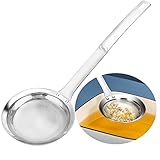
An evaporated milk mac and cheese base is the ultimate hack for a lump free sauce. Understanding the difference between evaporated milk and condensed milk is vital—evaporated milk is unsweetened and has 60% of its water removed. This concentrated protein structure replaces traditional roux entirely. When evaporated milk + sharp cheddar meet, the dense proteins trap the fats smoothly without the need for a flour thickener.
Ingredients
- 1 (12 oz) can evaporated milk (NOT sweetened condensed milk).
- 2 tbsp unsalted butter.
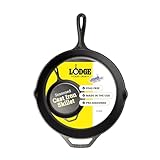
- Cast iron skillet or heavy-bottomed pan.
Directions
- Place your cast iron skillet or heavy pot onto the stove.
- Pour the entire can of evaporated milk into the cold skillet.
- Add the unsalted butter directly to the milk pool to begin your butter + milk base.
Pro-Tip: If you’re wondering does evaporated milk make mac and cheese creamy, the answer is yes! It contains 60% less water than whole milk, meaning the milk proteins are highly concentrated. This provides a natural viscosity without gluten, giving you a thick base without making a flour roux.

6. Simmer On Low Heat

Temperature control is everything—pin this essential cooking tip!
Following a strict stovetop cooking temperature guide is critical when you simmer on low heat. Rushing this step is a common mistake. You must prevent high heat curdling to preserve the delicate milk proteins. Maintaining low heat + no curdling ensures the dairy base is ready to accept the cheese gently. The proteins require low heat to prevent syneresis in dairy sauces, which is the scientific term for the liquid separating from the solids.
Ingredients
- The milk and butter base in the skillet.
- Instant-read cooking thermometer (optional but highly recommended).
Directions
- Turn the stove burner to medium-low heat.
- Simmer on low heat, watching closely until tiny bubbles just begin to form around the perimeter of the skillet. Do not let it come to a rolling boil!
- Monitor the temperature; if you have a thermometer, you want the liquid around 165°F to 180°F—the sweet spot for low shear cheese melting.
Pro-Tip: To avoid broken roux-less sauce, you must respect the dairy. Boiling evaporated milk aggressively will denature the proteins, leading to a curded dairy sauce before the cheese even hits the pan. Patience here guarantees a velvety texture.

7. Season With Spices
Don’t skip the nutmeg—save this flavor hack to your boards!
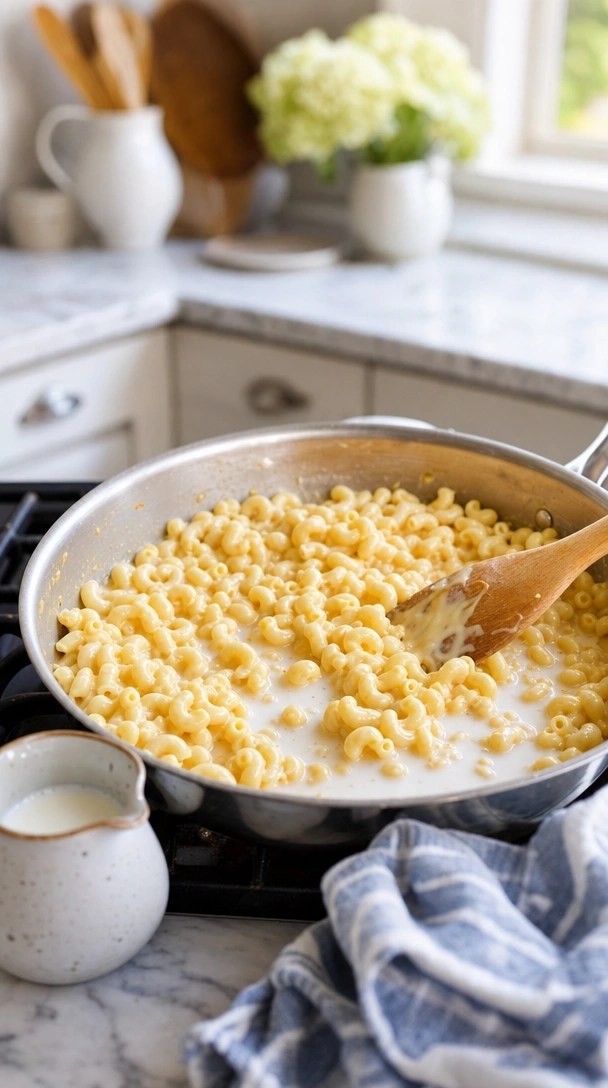
When you season with spices, you elevate the dish from basic to gourmet. Many wonder why add nutmeg to mac and cheese recipe? Ground nutmeg adds a subtle, earthy depth that contrasts the heavy dairy. Additionally, dijon mustard + flavor enhancer properties cut through the fat. The acidity in the mustard enhances cheddar sharpness and actually assists the emulsion process chemically.
Ingredients
- 1 tsp dry dijon mustard powder (or wet Dijon mustard).
- 1/4 tsp ground nutmeg.
- 1/2 tsp garlic powder.
- 1/4 tsp smoked paprika (optional, for color and depth).
Directions
- Measure out your spices while the milk is coming to a simmer.
- Season with spices by whisking the mustard, nutmeg, garlic powder, and paprika directly into the hot milk base.
- Whisk vigorously to ensure there are no dry spice clumps floating in the liquid.
Pro-Tip: If you’re wondering why do you add dijon mustard to mac and cheese, it’s a dual-purpose culinary secret. Flavor-wise, it amplifies the tang of the cheddar. Scientifically, mustard acts as a mild emulsifier, helping to stabilize the flour free cheese sauce.
8. Whisk Milk And Butter

Save this whisking technique for perfectly smooth sauces!
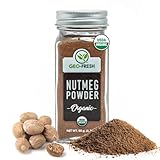
To create an unthickened cheese sauce base, thoroughly whisk milk and butter together until homogenous. The mechanical action emulsifies with fat, ensuring the butterfat is perfectly dispersed throughout the milk proteins. This physical agitation is critical for an easy mac and cheese no flour, setting the stage for the cheese to melt in flawlessly.
Ingredients
- The seasoned hot milk mixture.
- Heat-resistant silicone whisk.
Directions
- Whisk milk and butter continuously for 30 seconds once the butter has completely melted.
- Observe the liquid; it should look completely uniform with no butterfat pools floating on the surface of the milk.
- Turn off burner heat or drop it to the absolute lowest “warm” setting available on your stove right before the next step.
Pro-Tip: Using a heat-resistant silicone whisk ensures you can aggressively agitate the bottom corners of your skillet without scratching it. This mechanical mixing is crucial for the fat phase separation prevention before the heavy cheese is dropped in.
9. Stir In Cheese Gradually

Patience is key here—pin this step for foolproof melting!
You must stir in cheese gradually to prevent cheese separation. When adding your three cheese blend to the hot milk, dumping it all at once drops the temperature drastically and shocks the proteins. Adding cheese slowly prevents cheese breaking and maintains the integrity of your silky smooth sauce. This slow integration is the most vital step in preventing a greasy, clumpy disaster.
Ingredients
- Your 12 oz of freshly grated cheese (cheddar and gruyere).
- A sturdy wooden cooking spoon.
Directions
- Grab a small handful (about 1/4 cup) of your freshly shredded cheese.
- Stir in cheese gradually, using a figure-eight motion with your wooden spoon, waiting until that handful is completely melted before adding the next.
- Repeat this process until all the cheese has been fully incorporated into the skillet.
Pro-Tip: Never dump all your cheese in at once! This rapid temperature drop is the #1 cause of cheese separation. By adding it in handfuls, you maintain the thermal stability of cheddar, ensuring a completely lump free sauce.

10. Melt Until Smooth

Witness the perfect glossy sauce—save this texture goal!
As you melt until smooth, watch as the creamy cheese sauce transforms into a glossy, opaque liquid. The goal is to smooth out gritty cheese entirely. This pure, real cheese sauce delivers a velvety texture that completely eliminates flour taste. The visual cue of a smooth, lump-free sauce indicates that the dairy fat has fully emulsified within the protein network.
Ingredients
- The fully incorporated cheese sauce in the skillet.
Directions
- Observe the surface of the sauce; it should be glossy, opaque, and incredibly thick.
- Melt until smooth by stirring continuously until absolutely no individual shreds of cheese are visible.
- Perform the spoon test: dip a wooden spoon in the sauce, pull it out, and swipe your finger across the back. If the line holds its shape without immediately running, it’s perfect.
Pro-Tip: If your sauce looks slightly thin at this stage, do not panic and reach for a flour roux. As the stovetop cheese pasta sauce cools slightly off the heat, it will naturally thicken dramatically.

11. Emulsify Sauce Naturally (The Secret Weapon)

Pin the ultimate restaurant secret for unbreakable cheese sauce!
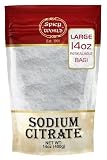
This culinary secret will completely change your stovetop pasta game: emulsify sauce with real deli American cheese. Many ask, can I use american cheese to make mac and cheese creamy? Absolutely. American cheese slices contain naturally occurring sodium citrate, which acts as a powerful binder for the american cheese + emulsification process. This simple addition prevents cheese separating instantly.
Ingredients
- 2 slices high-quality deli american cheese slices (or 1/2 tsp food-grade sodium citrate powder).
Directions
- Tear the two slices of American cheese into smaller pieces.
- Emulsify sauce naturally by stirring these pieces into your hot cheddar mixture until they vanish.
- Watch as the sauce instantly transforms, taking on a hyper-glossy, restaurant-quality sheen.
Pro-Tip: You aren’t adding American cheese for the flavor (the sharp cheddar handles that); you are adding it for the chemistry! American cheese is packed with emulsifying salts like sodium citrate. This completely prevents whey and fat separation, guaranteeing a bulletproof creamy mac and cheese without flour. (Alternatively, you can purchase pure sodium citrate powder).
12. Fold Noodles Into Sauce

The most satisfying step! Pin this glorious mixing moment.
Gently fold noodles into sauce to complete your one pot macaroni masterpiece. As the elbow macaroni meets the hot, gooey and melty cheese, they combine to form a flawless kid friendly comfort meal. This is where your mac and cheese no flour no roux finally comes together, requiring a delicate touch to avoid breaking the pasta.
Ingredients
- Your perfectly cooked, drained pasta.
- The completed, hot cheese sauce in the skillet.
- A wide, heat-resistant silicone spatula.
Directions
- Transfer the drained pasta immediately into the skillet with the hot cheese sauce while the pasta is still steaming.
- Fold noodles into sauce using a gentle scooping motion from the bottom of the pan up to the top.
- Avoid aggressive stirring, which can tear the noodles and create an unappealing texture.
Pro-Tip: If the sauce seems slightly too thick when you begin folding, splash in a tablespoon of your reserved starchy pasta water. This acts as a hydrocolloid thickening alternative that thins the dairy while maintaining the emulsion.

13. Coat Macaroni Evenly

Look at that cheese pull! Save this to your comfort food boards.
Ensure you coat macaroni evenly to guarantee every bite of this thick and creamy mac and cheese recipe no flour is perfectly smothered. Allowing the dish to rest for a few minutes fixes a thin sauce, as it thickens upon cooling. This resting period is the easiest way to stop mac and cheese drying out later, ensuring the sauce complements cavatappi ridges beautifully.
Ingredients
- The combined macaroni and cheese.
Directions
- Toss the noodles gently until every single ridge is filled with sauce.
- Coat macaroni evenly and then let the entire skillet rest, undisturbed, for 3 to 5 minutes off the heat.
- Serve immediately after resting for the ultimate gooey, creamy experience.
Pro-Tip: In the test kitchen, we found that a 3-minute rest is the ultimate grainy cheese sauce fix. As the temperature drops slightly, the sauce tightens up and clings aggressively to the noodles, mimicking a flour-thickened sauce flawlessly.

14. Layer With Cheese (Optional Baking Step)

Prefer a crispy baked top? Save this broiling trick!
If you prefer a crispy topping, layer with cheese and place the skillet under the broiler. This transforms a stovetop meal into a creamy baked mac and cheese no flour. The high heat will gratinate under broiler rapidly, creating a beautiful golden brown crust while keeping the interior ultra creamy. When comparing baked vs stovetop mac and cheese without flour, the broiler method offers the best of both worlds.
Ingredients
- The finished stovetop mac and cheese in an oven-safe skillet.
- 1 cup reserved shredded cheddar/gruyere blend.
Directions
- Preheat your oven broiler to high.
- Layer with cheese by sprinkling the reserved shredded cheese generously over the top of the skillet.
- Bake until bubbling and golden brown, usually just 2 to 3 minutes under the direct heat of the broiler.
Pro-Tip: If you want a creamy baked mac and cheese recipe without flour, do not bake it for 30 minutes at 350°F! Without a flour binder, a long bake will cause the sauce to separate and turn oily. A quick 2-minute blast under the broiler gives you the golden brown crust while keeping the interior perfectly silky.
15. Reheat With Milk Splash

Never eat dry leftovers again—pin this reheating hack!
To successfully enjoy this meal the next day, reheat with milk splash. The butterfat hardens in the fridge, so knowing how to store leftover mac and cheese without flour properly is essential. A fresh milk base added during reheating replenishes the moisture content in fontina and gruyere, helping keep cheese sauce creamy when reheating instead of splitting into grease.
Ingredients
- Leftover chilled mac and cheese.
- 1-2 tablespoons of whole milk or evaporated milk per serving.
- Airtight glass storage containers.
Directions
- Store leftovers in an airtight glass container in the refrigerator for up to 3 days.
- Reheat with milk splash by adding a tablespoon of milk to the bowl before microwaving or heating in a saucepan.
- Warm gently on 50% power in the microwave, stirring every 30 seconds, to prevent the cheese from separating.
Pro-Tip: Flourless sauces firm up dramatically in the fridge because the butterfat solidifies. The milk splash acts as a natural emulsion macaroni reviver, coaxing the rich stovetop macaroni and cheese without roux back to its original creamy, glorious state.

Key Takeaways: Your Quick Guide to Creamy Mac And Cheese No Flour
Reviewing the fundamental principles of a flourless emulsion guarantees recipe success. Achieving an easy mac and cheese no flour is all about respecting the chemistry of the dairy. Keep these key takeaways in mind to ensure your cheese sauce without flour is consistently smooth and vibrant.
Key Takeaways:
- Use Evaporated Milk as the Base: – The concentrated proteins in evaporated milk naturally thicken the sauce without requiring a flour roux, giving you a completely flour free cheese sauce.
- Always Grate Block Cheese Manually: – Pre-bagged cheeses contain anti-caking starches and cellulose that actively prevent smooth melting, leading to a gritty, curded dairy sauce.
- Embrace the Power of American Cheese: – Adding just one or two slices of deli American cheese introduces sodium citrate, acting as a foolproof starch gelatinization alternative that binds the fat and water perfectly.
- Never Boil the Dairy Mixture: – Rapid boiling denatures milk proteins instantly. Maintain a gentle simmer to ensure a silky smooth sauce and prevent high heat curdling.
- Reserve the Pasta Water: – A splash of starchy cooking water is the ultimate secret weapon to thin out an ultra creamy sauce that has become too thick, acting as a natural binder.
- Master the 2-Minute Broil: – For a creamy baked mac and cheese recipe without flour, avoid long baking times. A quick 2-minute trip under the broiler gives you a crispy top without drying out the interior.
People Also Ask About Creamy Mac And Cheese No Flour
When experimenting with a roux-less sauce, it is completely normal to encounter troubleshooting questions. Whether you are curious about what can I use instead of flour in mac and cheese or why your sauce turned grainy, these detailed answers cover the exact food science behind a perfect cheese emulsion.
How to make creamy mac and cheese without flour?
To make a rich, creamy mac and cheese without flour, replace the traditional butter-and-flour roux with evaporated milk. Bring the evaporated milk to a gentle simmer, then gradually whisk in freshly grated block cheese over low heat until a naturally thick, velvety emulsion forms.
Evaporated milk contains 60% less water than regular milk, meaning its concentrated proteins provide natural viscosity without gluten. By avoiding high heat and pre-shredded bagged cheese, you guarantee a foolproof, 15-minute stovetop mac and cheese without flour that rivals any restaurant.
Why does my cheese sauce get grainy without flour?
Cheese sauce becomes grainy without flour due to two main culprits: using pre-shredded bagged cheese coated in anti-caking agents, or exposing the dairy to high heat, which causes the proteins to seize, curdle, and separate from the fat.
To achieve a lump free sauce, always grate your own cheddar directly from the block. Furthermore, ensure your stovetop is set to medium-low, as maintaining dairy temperature control prevents the casein protein network from tightening up and expelling gritty whey particles.
What can I use instead of flour in mac and cheese?
The best alternatives to a flour roux in mac and cheese are evaporated milk, heavy whipping cream reduced on the stove, or the addition of sodium citrate (often found in American cheese) to naturally emulsify the fats and liquids.
While some cooks use cornstarch as a starch gelatinization alternative, using evaporated milk paired with high-quality sharp cheddar cheese creates the purest, richest cheese flavor. It completely eliminates flour taste and keeps the recipe naturally gluten-free.
Does evaporated milk make mac and cheese creamy?
Yes, evaporated milk is the ultimate secret ingredient for creamy mac and cheese. Because a majority of its water content has been removed, the remaining high concentration of milk proteins acts as a natural thickener and binder when heated.
When you melt cheese into an evaporated milk mac and cheese base, the proteins form a stable web that traps the melted butterfat. This prevents the dreaded oily separation and results in a uniquely silky smooth sauce.
Why isn’t my mac and cheese creamy?
Your mac and cheese likely isn’t creamy because the sauce broke due to extreme heat, you used the wrong ratio of liquid to cheese, or the pasta absorbed all the moisture because it wasn’t served immediately.
To fix a solve thin runny cheese sauce, gently fold in a splash of starchy pasta water. If the dish has dried out, it lacks the proper precise milk to cheese ratio. Remember that a flourless mac and cheese thickens rapidly as it cools, so it should look slightly soupy while in the hot skillet.
How do you keep mac and cheese creamy when reheating?
To keep mac and cheese creamy when reheating, add one to two tablespoons of whole milk or evaporated milk to the bowl before microwaving it gently at 50% power, stirring frequently.
Without a flour binder, chilled cheese sauce solidifies as the butterfat hardens. Blasting it on high heat in the microwave will cause fat phase separation. A gentle warm-up with a milk splash reconstitutes the emulsion perfectly.
Can you use cornstarch instead of flour for mac and cheese?
Yes, you can use a cornstarch slurry instead of flour to thicken mac and cheese, but it requires mixing the cornstarch with cold liquid first before whisking it into the hot dairy base to prevent clumping.
However, relying strictly on an evaporated milk + sharp cheddar method is often preferred by chefs because cornstarch can sometimes yield a slightly gelatinous or glossy texture compared to the lush, creamy mouthfeel of a pure dairy emulsion.
Why do you add dijon mustard to mac and cheese?
Dijon mustard is added to mac and cheese as both a flavor enhancer and a subtle emulsifier. The tangy acidity cuts through the heavy dairy, amplifying the sharpness of the cheddar, while the mustard seed compounds help stabilize the sauce.
You won’t taste a distinct mustard flavor in the final dish; instead, it provides a background complexity that makes a simple three ingredient cheese pasta taste like a gourmet, slow-cooked restaurant meal.
What is the best cheese for mac and cheese without flour?
The absolute best cheeses for flourless mac and cheese are blocks of sharp cheddar for robust flavor, paired with Gruyère or Fontina for their superior, stringy melting capabilities and high moisture content.
For the ultimate foolproof recipe, adding a single slice of deli American cheese to your upscale blend is highly recommended. The emulsifying salts in American cheese act as an insurance policy, locking the fats together and guaranteeing an ultra creamy finish.
Can you freeze stovetop mac and cheese made without flour?
While you can freeze stovetop mac and cheese made without flour, it is not highly recommended, as dairy-based emulsions without a starch binder are prone to breaking, becoming grainy and separated upon thawing and reheating.
If you must freeze it, thaw it slowly overnight in the refrigerator. Reheat it in a saucepan over very low heat with a generous splash of heavy cream, whisking vigorously to encourage the natural emulsion macaroni to re-form.
Final Thoughts on Creamy Mac And Cheese No Flour
Mastering creamy mac and cheese no flour is a culinary revelation that permanently changes how you approach weeknight comfort food. By swapping a heavy, time-consuming flour roux for the protein-rich magic of evaporated milk, you eliminate the risk of a chalky aftertaste and drastically cut down your time at the stove. This easy stovetop recipe proves that you don’t need complicated techniques to achieve restaurant-quality results—just an understanding of how real ingredients interact.
The true secret lies in respecting the ingredients: hand-shredding high-quality block cheese, controlling your heat, and allowing the natural chemistry of the dairy to create an unbreakable, silky smooth sauce. Whether you are cooking for a gluten-sensitive family member or simply craving a fast, decadent rich comfort food after a long day, this 15-minute method delivers flawlessly every single time.
Grab your cast iron skillet, pick your favorite ridged pasta, and trust the process. Once you experience the unparalleled velvety texture of this flourless method, you will never look at boxed macaroni or traditional roux-based recipes the same way again. What cheese combination are you going to experiment with first? Let me know in the comments below!
Last update on 2026-09-03 at 11:25 / Affiliate links / Images from Amazon Product Advertising API
