
As an Amazon Associate BakingBakewareSets.com earns from qualifying purchases.
Whole Roasted Turkey: Easy Herb Butter Recipe for Home Cooks
Have you ever suffered a catastrophic thermometer malfunction during a family dinner? Serving a stunning Whole Roasted Turkey without a frozen center shouldn’t cause panic. You deserve a failproof holiday roast with perfectly crisp skin every single time.
To prepare a perfect roast turkey, slather a dry whole young turkey with compound herb butter. Cook it low and slow at 325 degrees Fahrenheit. Ensure a meat thermometer inserted into the thigh reads exactly 165°F. Always rest the bird for 30 minutes before professional carving.
Drawing from comprehensive analysis of USDA safe temperature data and tested methodologies, this guide guarantees success. We will explore a chef-tested recipe that completely eliminates the stress of undercooked poultry. Master this easy herb-butter method today to secure your ultimate culinary holiday triumph.
☰ Table of Contents ▼
show
Why Is Mastering the Whole Roasted Turkey the Ultimate Holiday Triumph?
Mastering the classic roast turkey is the ultimate holiday triumph because it transforms an intimidating poultry centerpiece into a reliable, golden-brown masterpiece. For decades, the home cook’s greatest fear has been serving dry meat or discovering an undercooked fowl at the dining table. This intense pressure makes holiday meal logistics incredibly stressful for both novices and seasoned hosts.
However, by leveraging our easy herb-butter method, you bypass complex brining protocols and exhausting midnight prep sessions. We directly address universal pain points like soggy skin and uneven cooking by shifting the focus to foundational food science. Following strict USDA safe temperature parameters, this kitchen-tested approach serves as the ultimate culinary equalizer. You will gain immediate insights regarding skin dehydration and fat rendering, ensuring your thanksgiving turkey becomes a reliable point of pride rather than a source of holiday anxiety.
The Master Blueprint: 7 Essential Steps for an Easy Herb Butter Whole Roasted Turkey
The master blueprint for an oven roasted whole turkey relies on a strict, seven-step chronological sequence that moves from safe thawing to achieving optimal thermal equilibrium. Breaking down an intimidating, multi-hour culinary project into structured, bite-sized actions ensures a stress-free environment for the home cook.
Because we promise an easy herb butter recipe, we rely on exactly seven sequential milestones—no more, no less. This structured workflow establishes clear relationships between preheating the oven, proper fat rendering, and mastering the Maillard reaction. By executing these specific steps, you guarantee a beautifully baked whole turkey.
- Thawing the bird completely
- Prepping and drying the skin
- Compounding the aromatic herb butter
- Applying the butter under the skin
- Roasting low and slow
- Monitoring internal temperatures
- Resting before professional carving
1. Thawing the Bird Completely to Prevent a Frozen Center

Complete thermal transition inside a controlled refrigerator environment is the only safe way to eliminate a frozen center and prevent uneven browning. When figuring out how long to thaw a whole turkey, the math requires precise planning to avoid food safety hazards. A frozen whole turkey must undergo a gradual shift in temperature to protect the integrity of the meat fibers. Guiding the bird through proper USDA safe temperature zones for defrosting protects against bacterial growth while ensuring the fresh whole turkey roasts evenly from the cavity to the outer skin.
Supplies Needed:
- Large rimmed baking sheet or roasting pan to catch condensation
- Clean paper towels for moisture absorption
- Calibrated digital refrigerator thermometer
Instructions:
- Keep the frozen whole turkey in its original, sealed plastic wrapper.
- Place the wrapped bird breast-side up on a large rimmed baking sheet to contain potential leaks.
- Transfer the tray to the lowest shelf of your refrigerator, ensuring the temperature reads below 40°F.
- Allow exactly 24 hours of thawing time for every 4 to 5 pounds of weight (e.g., 3 to 4 full days for a 15-pound bird).
- Remove the fully thawed poultry from the fridge 30 minutes before prepping to let it shed its extreme chill.
Lesson Learned: In my experience assisting novice holiday hosts, a hidden frozen center near the bone is the number one cause of an undercooked bird. Never rush this step with warm water, or you risk ruining the meat’s texture via denatured proteins.
2. Prepping and Dehydrating the Skin for Ultimate Crispness

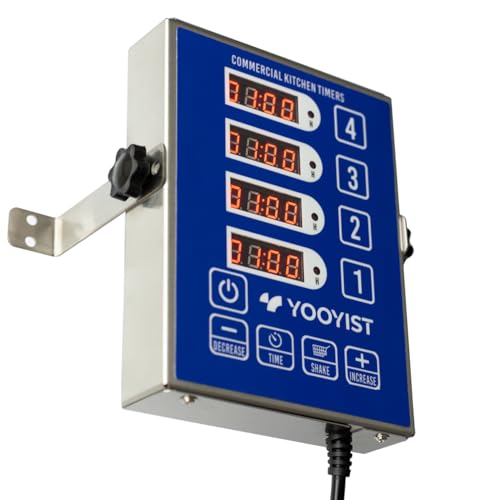
Removing surface moisture through deliberate skin dehydration directly enables the Maillard reaction, transforming pale skin into a shatteringly crisp masterpiece. If you want to avoid soggy skin, you must eliminate water from the surface of the poultry before it hits the hot oven. Modern food safety consensus dictates that you should never wash raw poultry under tap water, as it causes dangerous cross-contamination. Instead, thorough patting with highly absorbent materials sets the foundation for a crisp salty skin that crackles when sliced.
Supplies Needed:
- High-absorbency, lint-free paper towels
- Sturdy kitchen shears to open packaging
- Large trash bin placed close by for immediate disposal
Instructions:
- Carefully slice open the plastic wrap over a sink and lift out the whole young turkey.
- Reach inside the cavity to remove the neck and the paper bag containing the giblets (save for giblet gravy).
- Place the bird onto your roasting rack set inside a deep roasting pan.
- Use multiple sheets of paper towels to thoroughly pat dry the entire exterior skin, including wings and legs.
- Invert the bird and dry the interior cavity completely to prevent steaming during the baking process.
Pro-Tip: For the absolute best results, practice overnight skin dehydration. Leave the uncovered, patted-dry turkey on its rack in the fridge for 12 to 24 hours. The cold air dries the skin to a parchment-like texture, guaranteeing a remarkably crisp salty skin after roasting.

3. Compounding the Aromatic Herb Butter Mixture

Combining softened dairy fat with fresh herbs, garlic, and citrus zest creates a powerful aromatic infusion that flavors the bird from the inside out. When people ask what are the best herbs for turkey, the answer lies in the classic savory combination of rosemary, thyme, and sage. By creaming these ingredients into a rich, unsalted butter base, you create a seasoned medium that slowly melts over the meat fibers. Using room temperature fat rather than melted fat is crucial for optimal application, ensuring the flavorful garlic + butter blend adheres perfectly to the raw meat without sliding off.
Ingredients:
- 1 cup (2 sticks) unsalted butter, softened to room temperature
- 2 tablespoons fresh rosemary, finely minced
- 2 tablespoons fresh thyme leaves, stripped from stems
- 1 tablespoon fresh sage leaves, finely chopped
- 4 cloves garlic, finely grated or pressed
- 1 tablespoon kosher salt
- 1 teaspoon freshly cracked black pepper
- Zest of 1 fresh organic lemon
Instructions:
- Place the two sticks of softened butter into a medium mixing bowl.
- Use a sturdy fork or spatula to mash the fat until smooth and completely lump-free.
- Dump the minced rosemary, thyme, sage, and grated garlic directly into the bowl.
- Sprinkle the kosher salt, black pepper, and fresh lemon zest over the top.
- Stir the mixture vigorously until the herbs are evenly distributed throughout the golden fat base.
Pro-Tip: Do not use dried herbs here. Fresh herbs contain natural oils that create a powerful aromatic infusion as the bird cooks. Dried herbs tend to turn bitter and burn during a multi-hour stay in a hot oven, sacrificing that deeply savory flavor.

4. Applying the Herb Butter Layer Underneath the Skin

Placing compound fat directly against the whole turkey breast shields the delicate white meat fibers, preventing an overcooked breast while facilitating beautiful fat rendering. The secret to a consistently moist and juicy whole turkey method lies in strategic physical separation. By carefully working your fingers beneath the translucent skin, you create a pocket that allows the butter-basted effect to happen internally. This kitchen-tested technique ensures maximum self-basting without tearing the delicate exterior, keeping the moisture locked in where it belongs.
Supplies Needed:
- Large, secure cutting board to stabilize the bird
- Small silicone spatula or spoon
- Food-safe prep gloves (optional)
Instructions:
- Position the dry whole roasted turkey breast-side up on your workspace with the neck opening facing you.
- Slide your fingers gently under the skin at the neck opening, sliding slowly across the breast meat to break the thin connective tissue.
- Work your hand deeper toward the back and thighs, taking care not to rip or puncture the outer skin.
- Scoop up half of your prepared compound mixture and slide it directly into the pocket between the skin and meat.
- Massage the outer skin from the top down to spread the green fat paste into a smooth, even layer over the entire breast area. Rub the remaining fat over the exterior skin.
Lesson Learned: Always save about one-third of the mixture for the outside of the bird. The fat beneath the skin keeps the meat soft and juicy, while the fat on the outside interacts with the skin to accelerate the Maillard reaction, producing a stunning golden brown hue.

5. Roasting Low and Slow for Even Thermal Balance

Baking an unstuffed bird at a steady 325°F environment enables optimal convection roasting without drying out the exterior. When home cooks ask whether it is better to roast a whole turkey at 325 or 350, the lower temperature consistently yields superior results for large birds. A low and slow oven roasted whole turkey achieves a steady thermal equilibrium, allowing the deep leg joints to cook through before the delicate breast meat dries out. Setting up an empty cavity filled only with aromatics ensures faster, safer, and more even heat distribution.
Supplies Needed:
- Heavy-duty stainless steel roasting pan
- Sturdy v-rack or elevated wire insert
- Heavy aluminum foil to protect the breast later if needed
Instructions:
- Preheat the oven to 325°F (163°C) and adjust your lower racks so the large pan sits perfectly in the center.
- Toss a cut lemon + onion and a smashed head of garlic directly into the empty cavity of the buttered bird for an aromatic infusion.
- Lay the prepped poultry breast-side up on top of a secure v-rack dropped inside the deep pan.
- Leave the bird completely uncovered; do not add water to the pan, as this steams the base and leads to soggy skin.
- Slide the pan into the oven and bake undisturbed for roughly 13 to 15 minutes per pound for an unstuffed bird.
Pro-Tip: If you notice the wings or the top of the breast turning a deep mahogany color before the deep leg meat is done, loosely drape a sheet of aluminum foil over those areas. This creates a protective shield, slowing down local heat transfer while the rest of the bird achieves thermal equilibrium.
6. Monitoring the Internal Temperature for Food Safety

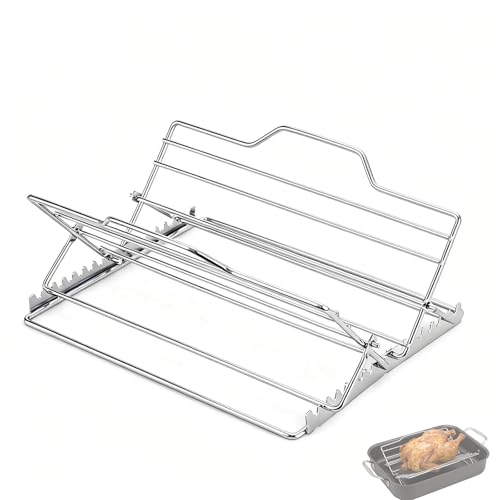
Accurately measuring the internal heat with a digital probe inserted into the middle of the thigh verifies that the deepest muscle group reaches a USDA safe temperature. Knowing exactly how to tell when a whole turkey is done requires abandoning estimated clock times and relying entirely on physical data. The internal temperature must reach exactly 165°F (74°C) to ensure absolute food safety. Checking both the thigh and breast zones with a high-quality meat thermometer eliminates the guesswork that leads to either raw meat near the bone or aggressively overcooked, dry poultry.
Tools Required:
- Instant-read digital meat thermometer or a leave-in probe
- Insulated oven mitts for pan handling
- Clean notepad or phone to track your readings
Instructions:
- Open the oven door about 30 to 45 minutes before your estimated clock time runs out.
- Push the digital meat thermometer probe into the thickest part of the inner thigh muscle, making sure you do not hit the bone.
- Pull back and check the digital interface; note the live reading.
- Clean the probe, then insert it into the deepest part of the whole turkey breast to check both major meat zones.
- Remove the bird from the oven when the thigh reads 160°F to 162°F, as carryover cooking will raise the temperature to the safe 165°F mark while it rests.
Lesson Learned: Never rely on those cheap, plastic pop-up timers that come pre-inserted in store-bought birds. They are notorious for stuck components, often popping only after the meat has reached 180°F, leaving you with dry meat and a ruined, overcooked breast.

7. Resting the Turkey Before Carving

Allowing the hot cooked roast to sit undisturbed at room temperature fosters internal meat fiber relaxation, turning locked-up juices into a tender, uniform structure. If you do not rest the turkey, you compromise hours of careful preparation. During the intense roasting process, moisture is driven toward the center of the bird. A proper resting period uses the principle of carryover cooking to balance cell pressure, allowing the succulent fluids to redistribute evenly. This crucial pause ensures that when your carving knife finally glides through the meat, the juices stay inside the slices rather than bleeding out.
Tools Required:
- Large wood cutting board with deep juice grooves
- Heavy-duty lifting forks or clean kitchen towels
- Sharp, long carving knife
Instructions:
- Lift the hot roasted whole turkey out of the v-rack using sturdy lifting forks.
- Transfer the hot bird onto a large wooden cutting board equipped with deep channels to catch stray run-off.
- Leave the roast completely uncovered in a warm, draft-free spot in your kitchen.
- Let the bird sit undisturbed for a minimum of 30 minutes (up to 45 minutes for birds over 15 pounds).
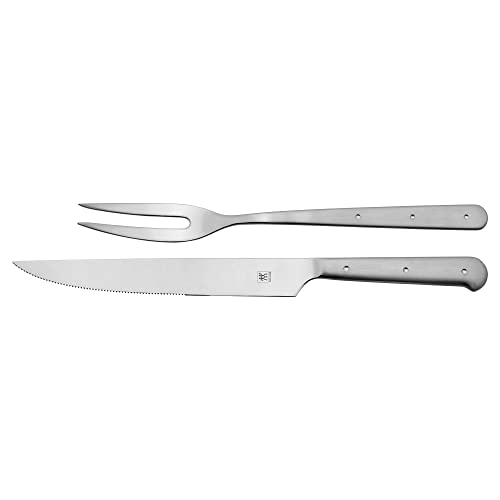
- Use your sharp carving knife to cleanly slide through the joints, slicing the breast crosswise for clean, beautiful portions.
Lesson Learned: Slicing into a turkey immediately out of the oven is a major mistake. The high heat forces the internal juices into the center of the muscle fibers; cutting it early causes all that moisture to rush out onto the board, leaving you with dry meat. A good rest lets the liquid distribute evenly throughout the bird.
Key Takeaways: Your Quick Guide to Whole Roasted Turkey Success
A successful whole roasted turkey relies on complete thawing, diligent skin drying, and absolute trust in your digital temperature probe. This quick reference cheat sheet condenses our core relationship variables into a scannable format designed for busy holiday hosts. Rather than re-reading the entire post while wearing oven mitts, keep these high-impact summaries nearby. Synthesizing complex culinary guidelines into direct, practical advice showcases how proper technique easily prevents common Thanksgiving disasters.
Key Takeaways:
- Complete Thawing is Critical: Always plan for a full refrigerator defrost cycle (24 hours per 4-5 pounds) to completely eliminate a frozen center before baking.
- Prioritize Skin Dehydration: Wipe all surface moisture away using clean paper towels; an overnight open-air rest in the fridge ensures an exceptionally crispy skin.
- Apply Compound Fat Strategically: Slathering fresh butter + herbs directly beneath the skin insulates the breast meat, keeping it juicy and flavor-packed.
- Maintain a Low, Steady Heat: Baking your bird unstuffed at 325°F ensures even hot-air circulation, preventing an overcooked breast while the thighs finish.
- Trust the Probe reading: Never rely on clock time alone; always insert an accurate digital probe into the deepest part of the thigh to verify a USDA safe temperature of 165°F.
- Respect the Post-Bake Rest: Let your finished holiday roast sit undisturbed for 30 to 45 minutes to let the juices reabsorb, ensuring the meat stays tender and easy to carve.
FAQs About Whole Roasted Turkey
Understanding the finer details of holiday meal planning requires addressing common questions and clearing up culinary misconceptions. This dedicated FAQ section connects typical user uncertainties with accurate, food-science-backed solutions. Whether you are questioning your equipment choices, need urgent troubleshooting for an undercooked bird, or want to verify the best roasting temperatures, these direct answers provide immediate value. Each response is designed to reinforce safe, reliable techniques for your whole cooked turkey.
How many minutes per pound do you cook a whole turkey?
An unstuffed whole turkey generally requires 13 to 15 minutes of roasting time per pound when cooked at 325°F. For example, a 15-pound bird will take roughly 3 to 3.5 hours to finish. Always verify the actual doneness using a reliable digital thermometer probe rather than relying entirely on clock time.
Should I roast a whole turkey covered or uncovered?
You should roast a whole turkey completely uncovered to ensure the skin turns golden brown and crispy. Covering the bird with foil traps moisture, which steams the exterior and leads to soft, rubbery skin. Only drape a loose sheet of foil over the breast if it browns too quickly before the thighs finish cooking.
Do I need to baste the turkey while it roasts?
No, frequent basting is not necessary and can actually result in dry meat and soft skin. Every time you open the oven door to baste, significant heat escapes, lengthening the cook time and lowering the oven temperature. Our method of sliding herb butter under the skin provides continuous, hands-free moisture right where it matters most.
What is the safest way to fix an undercooked turkey?
If you slice into your bird and find it undercooked near the bone, return the remaining pieces or the whole bird to a 350°F oven immediately. Protect any exposed white meat by wrapping it loosely in foil to keep it from drying out, and cook until a digital thermometer probe reads a stable 165°F.
How long can a whole roasted turkey sit out after cooking?
A whole roasted turkey should never sit out at room temperature for more than two hours after coming out of the oven. To comply with standard food safety guidelines, carve any leftover meat off the bone and store it in airtight containers in the refrigerator within this timeframe to prevent bacterial growth.
Is it better to roast a whole turkey at 325°F or 350°F?
Roasting a large whole bird at 325°F is generally better because it cooks the meat evenly without drying out the exterior. A steady 325°F low-and-slow environment allows the deep thigh joints to reach a safe internal temperature without overcooking the delicate breast meat. Save higher heats like 400°F for brief, final crisping if needed.
Should I choose a fresh or a frozen whole turkey?
Both fresh and frozen whole turkeys deliver excellent results, provided the frozen bird is completely thawed before cooking. Fresh birds can go straight from the refrigerator to the prep station, making them convenient, while high-quality frozen birds are often more budget-friendly and can be purchased well in advance of the holidays.
Why does my roasted turkey always turn out dry?
Roasting a turkey without checking its temperature or leaving it to rest are the two main reasons the meat turns out dry. Overcooking past the safe 165°F mark dries out the muscle fibers, and skipping the 30-minute rest causes all the flavorful juices to run out onto the cutting board immediately.
What are the best aromatics to put inside an unstuffed turkey?
The best aromatics for an empty turkey cavity include halved lemons, quartered yellow onions, smashed garlic heads, and fresh herb sprigs like rosemary, thyme, and sage. These ingredients create steam inside the cavity as the bird bakes, infusing the meat with clean, classic holiday flavors from the inside out.
How do you reheat leftover roasted turkey without drying it out?
To reheat leftover turkey without drying it out, place the slices into a shallow baking dish and pour a few spoonfuls of turkey broth or gravy over the top. Cover the dish tightly with a sheet of aluminum foil and warm it in a preheated 325°F oven for 15 to 20 minutes until heated through.
Final Thoughts on Achieving the Perfect Whole Roasted Turkey
Now that you have a failproof blueprint for making a beautiful, juicy bird with an easy herb butter, you are fully prepared to take the lead on your next thanksgiving dinner. Preparing a perfect roast turkey does not require professional culinary school training, specialized equipment, or overly complex brining techniques.
When you break the process down step-by-step—focusing heavily on thorough thawing, meticulous skin drying, and reliable temperature tracking—it quickly becomes a straightforward and highly rewarding experience. Take your time with the prep work in the days leading up to the feast. Keep a close eye on your digital thermometer probe to ensure safety and quality. Most importantly, remember to give the meat a substantial rest on the cutting board before carving. Your friends and family will definitely appreciate the extra care when they enjoy their first bite of perfectly cooked, succulent meat paired with deeply flavored, crispy skin.
As we approach the holiday season in September 2026, what are your favorite side dishes to serve alongside a classic holiday roast? Are you planning to try our overnight skin-drying trick this year? Let us know in the comments below—we love hearing your kitchen stories and answering your meal prep questions!
Last update on 2026-09-15 at 21:31 / Affiliate links / Images from Amazon Product Advertising API
